
The complete guide
Choosing an Engraved Compass as a Keepsake Gift
The problem with milestone gifts
Baptisms, confirmations, graduations and big birthdays all share the same awkward gift problem. The moment matters, the person knows it matters, and most of what you can buy does not match the weight of it. Cards get recycled. Chocolates get eaten. Framed verses go up on a wall for a year and then into a box in the garage.
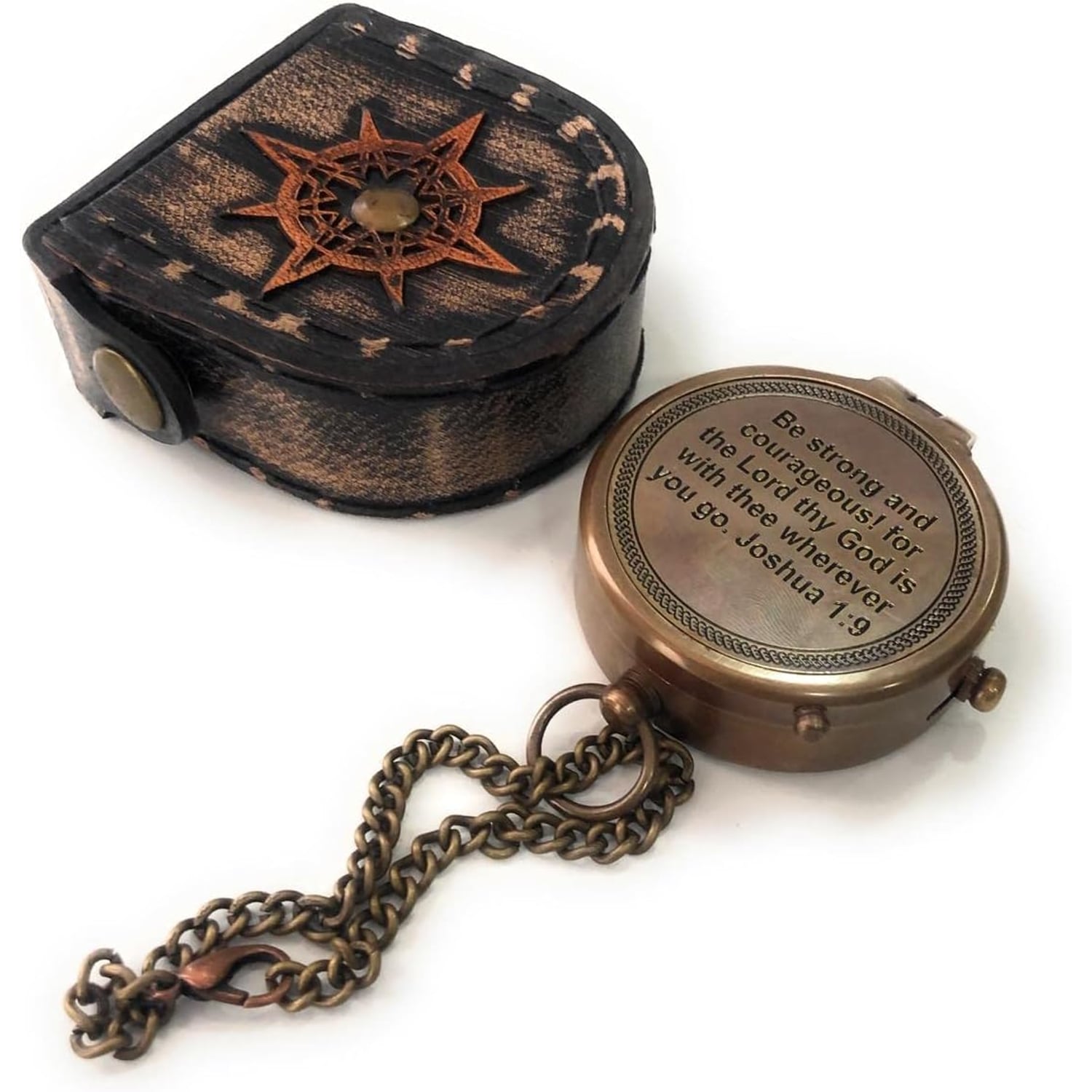
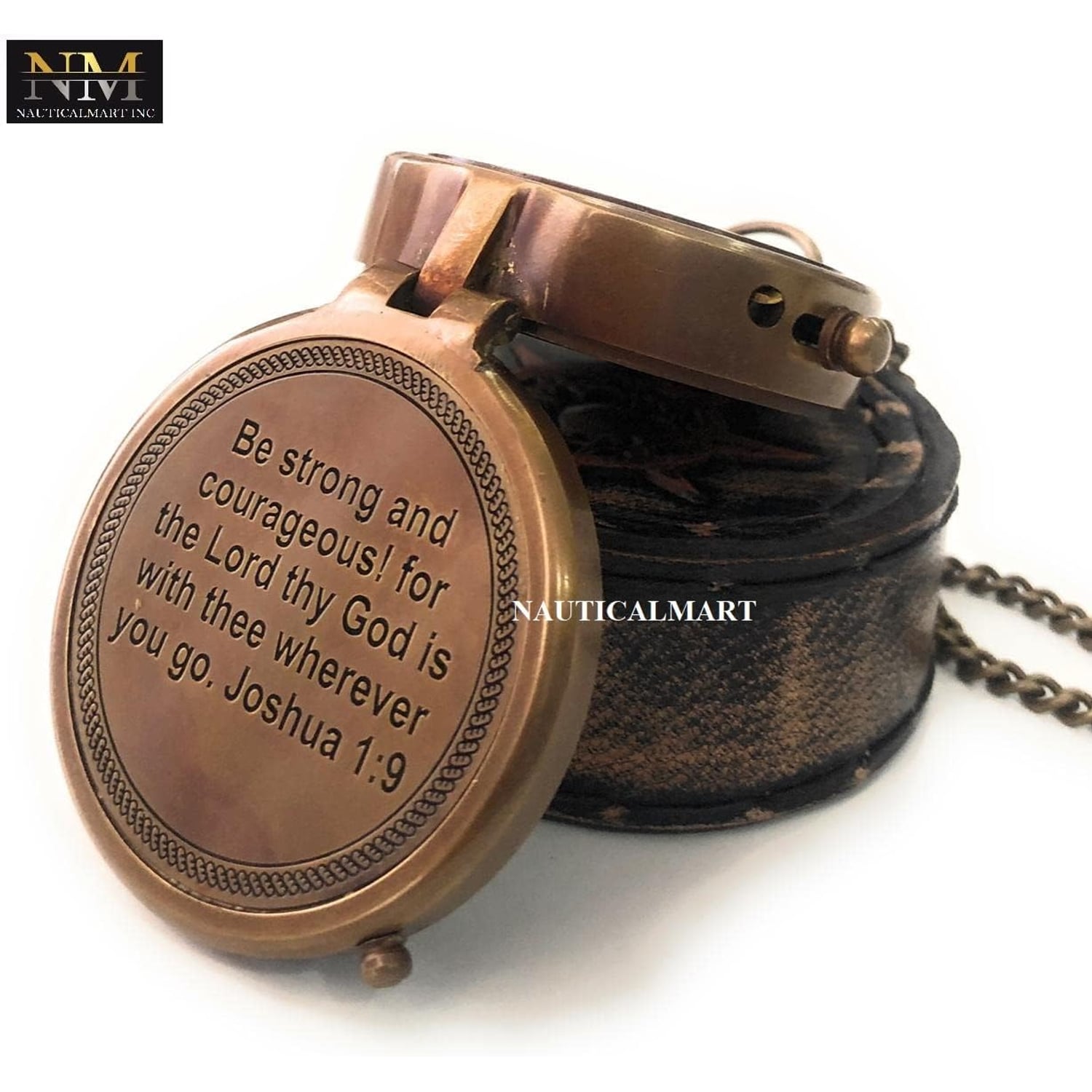
What people actually keep tends to have two things going for it. It does something, and it says something. A compass engraved with Joshua 1:9 manages both. It is a real instrument that gives a real bearing, and the words on the lid are the ones people reach for when somebody is about to step into something unfamiliar. "Be strong and courageous! for the Lord thy God is with thee wherever you go. Joshua 1:9"
That combination is why this style of gift has stayed popular while so many others have come and gone.
How a brass compass like this works
Strip away the engraving and you have a straightforward magnetic compass. A magnetised needle, balanced on a fine pivot, lines itself up with the Earth's magnetic field. North sits where the needle points, and you read your direction off the dial around it.
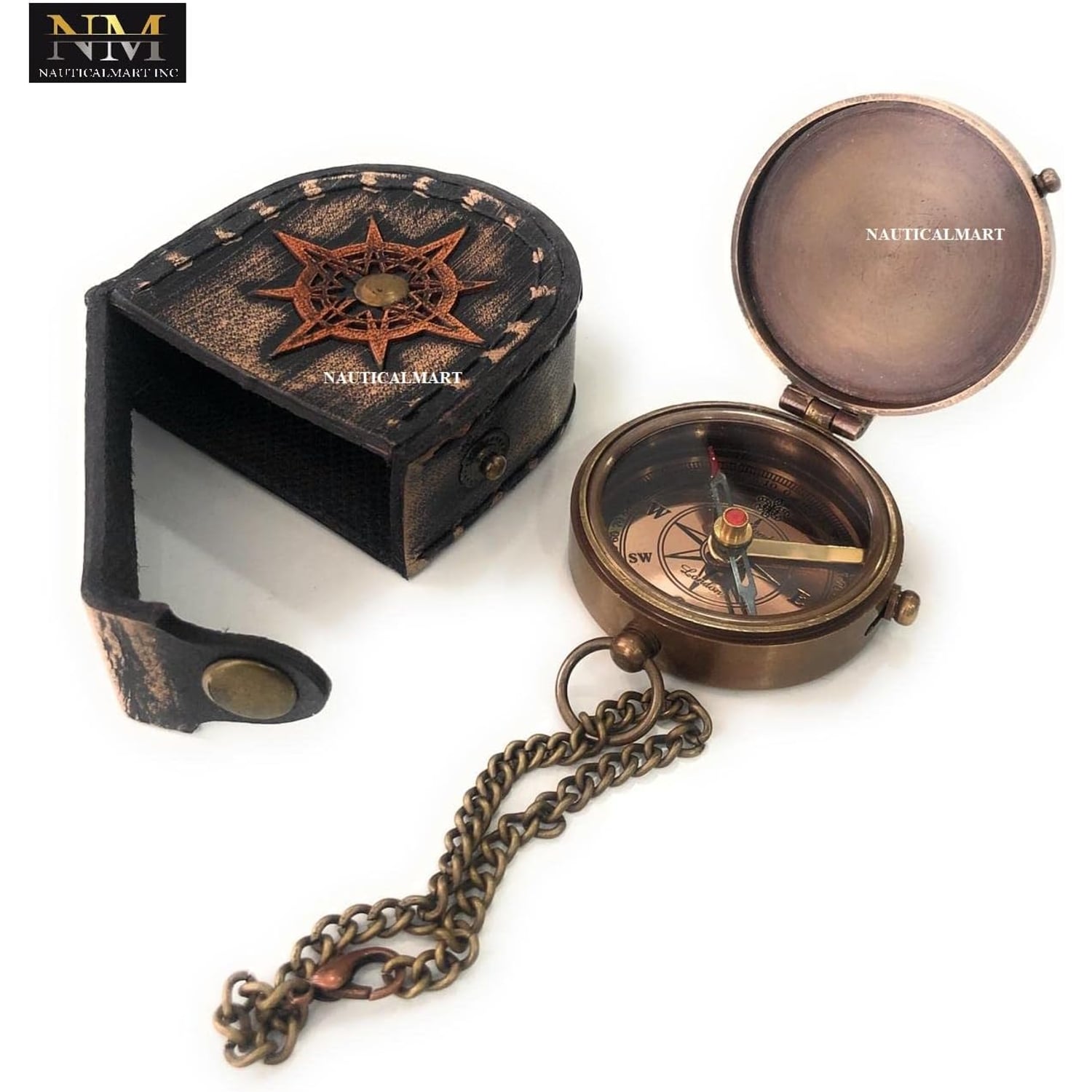
Two details separate a usable compass from a souvenir. The first is the jewelled bearing. The needle sits on a hardened point rather than a soft one, so it spins with very little friction. In practice that means the needle settles quickly instead of swinging back and forth for ages, and the reading you get is the one you can trust. The second is the degree graduation. This dial is marked in degrees with a standard scale from North and South, so you can hold an actual bearing, say 140 degrees, rather than just saying "roughly that way".
Then there is the lever on the side. That is the needle lift. Push it and the needle rises off its pivot point. It sounds like a small thing, but it is the single feature that keeps a pocket compass accurate over decades. Every jolt in a bag is a tiny hit on that bearing, and lifting the needle takes the load off. Old survey and military compasses almost all had one. Modern plastic ones almost never do.
The practical lesson is simple. Use the lever. It costs nothing and it is the difference between a compass that still works in twenty years and one that reads lazily after five.
Who this suits
The obvious group is anyone marking a church milestone. A baptism gift for a baby is usually given to the parents to keep until the child is old enough, and a brass compass sits comfortably in that role because it does not date and it does not break. For a confirmation, the recipient is usually in their teens, and an engraved compass for confirmation tends to land better than something soft or sentimental. It feels adult without being expensive jewellery.
Graduations are the second group. The symbolism needs no explaining. So are the quieter moments, moving country, starting a first job, deploying, heading off to university. The best Christian gift for men in those situations is often the one that does not announce itself as a gift at all, and this one can live in a drawer or a glovebox and still mean something when it is picked up.
There is a third group worth mentioning. Plenty of buyers have nothing religious in mind at all and simply like old instruments. Brass, a clear dial, a needle that swings and settles. If the person you are buying for enjoys maps, sailing, hiking or anything to do with navigation, the engraving reads as encouragement rather than doctrine, and it still works.
Who it does not suit? Anyone who wants a precision field instrument for serious navigation. For that you want a baseplate compass with a ruler edge and sighting lines. This is a carry compass with meaning attached, not a survey tool.
What to check before you buy
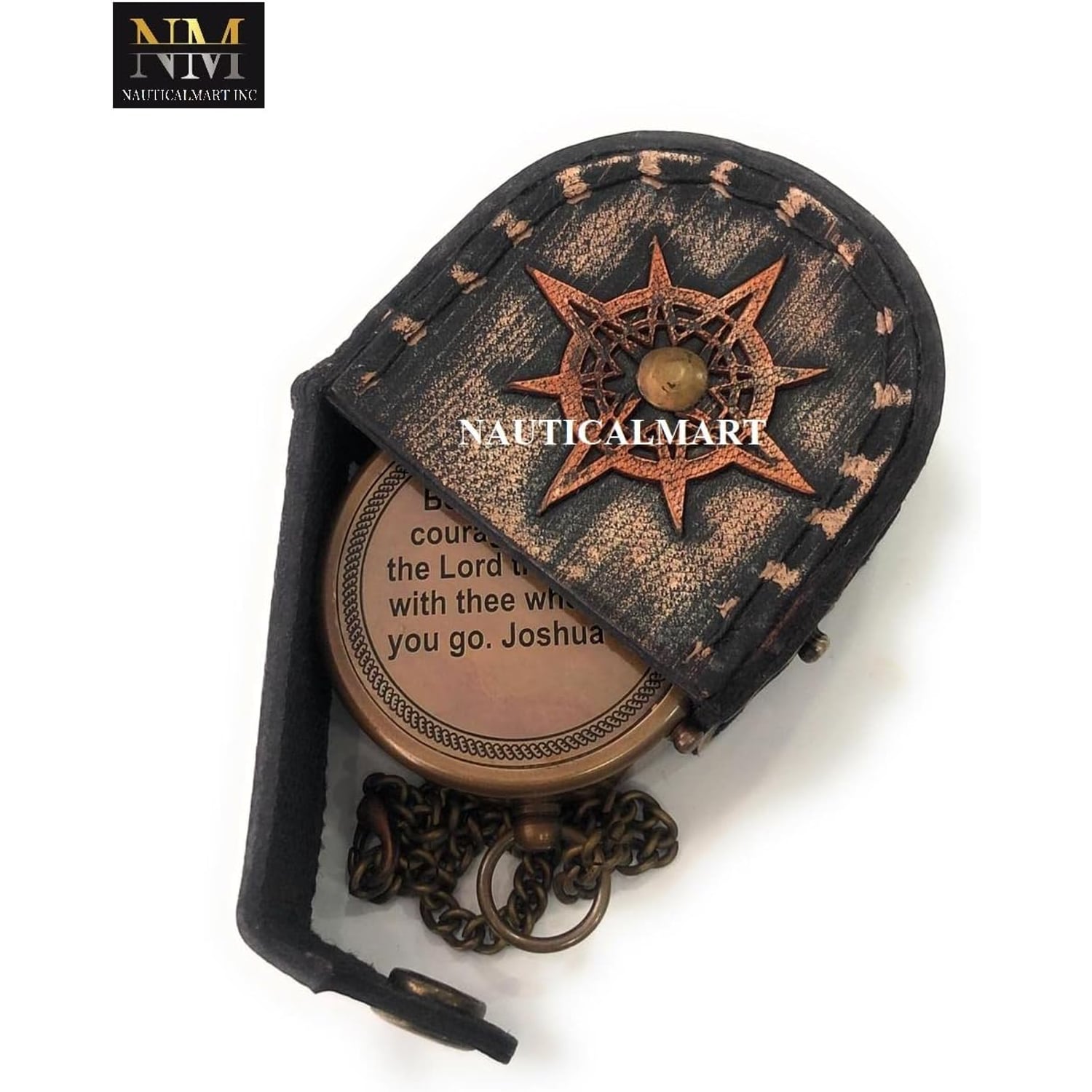
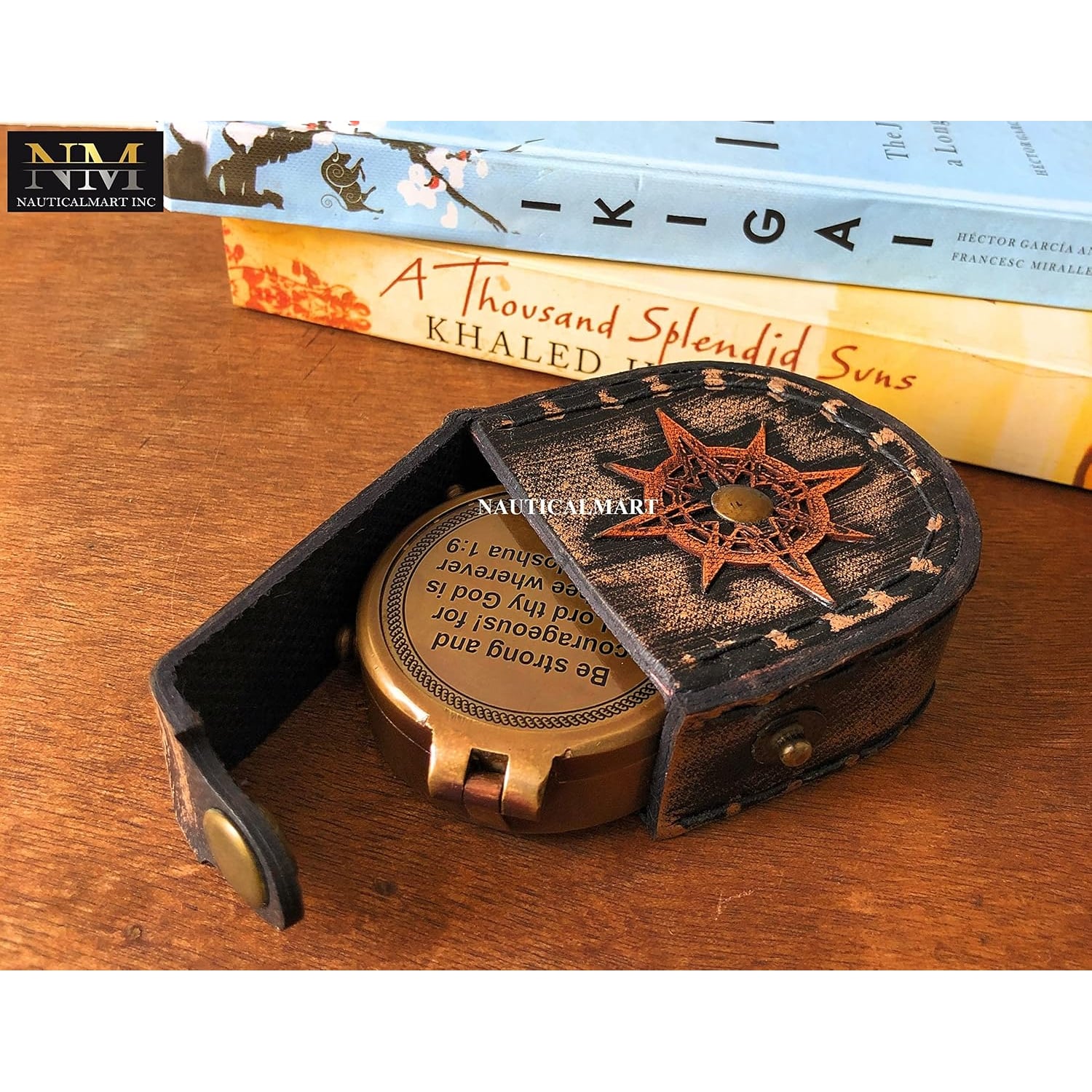
Think about the format first. Some compasses are meant to be displayed, others to be carried. This one comes with a leather case, which pushes it towards carrying. The case is also what makes it giftable straight out of the box, no extra pouch or presentation tin to hunt down the night before.
Second, think about engraving. The verse is already on this compass, which is both the appeal and the limit. You are not waiting on a custom engraving turnaround and you are not risking a typo, but you also cannot add a name or a date to the metal. Most people solve that with a handwritten card. A few buyers take it to a local engraver and have the inside of a wooden presentation box marked instead, which keeps the compass itself untouched.
Third, be honest about how it will be used. If the answer is "kept on a desk and picked up occasionally", a brass compass with a case is ideal. If the answer is "taken up a mountain every weekend in the rain", you should buy a weatherproof field compass for that job and give this as the keepsake alongside it.
Finally, order with time to spare. Dated events do not move. If a christening is on the twelfth, buying on the tenth is a gamble nobody enjoys.
Living with brass
Brass is forgiving. It does not rust, it takes knocks without chipping, and it holds engraving sharply. What it does do is change colour. Handled brass slowly darkens and picks up a warmer, duller tone. Some people polish that back out, others leave it, and there is no right answer.
If you do polish, keep the product away from the dial cover and off the engraved lettering, because repeated abrasive polishing is how crisp engraving goes soft. A soft dry cloth and the occasional light polish is plenty.
Water is the one thing to watch. There is no waterproof rating stated for this item, so dry it off if it gets caught in rain rather than leaving moisture sitting around the dial. Store it in the case, lever engaged, somewhere away from magnets. Phones, laptops, speakers and magnetic knife racks are all worth avoiding as a storage spot, because strong magnetic fields sitting next to a needle for months are not doing it any favours.
Getting a reliable reading
If the person receiving it has never used a compass, show them this once and they will be set. Hold it flat in the palm, not tilted, because a tilted needle drags on the housing. Step away from cars, metal railings, steel-framed buildings and anything electrical. Let the needle stop moving completely before you read it. Then read the degree figure at the direction you are facing.
Indoors, readings wander. That is not a fault in the compass, it is the wiring and the steel in the building. Walk outside into open ground and it settles.
One more thing worth knowing. A magnetic compass points to magnetic North, which is not quite the same as the North on a map. For walking around, the difference rarely matters. For map work over distance, you adjust for the local variation, and the figure for your area is printed on any decent topographic map.
The short version
This is a working brass compass with the Joshua 1:9 verse engraved on the lid, supplied in a leather case. The needle is jewelled so it settles fast, the dial reads in degrees, and a side lever lifts the needle to protect the bearing when it is not in use.
It suits baptisms, christenings, confirmations, graduations and milestone birthdays, and it suits anyone who would rather be given something solid than something sentimental. Keep it in its case, keep it away from magnets, wipe it with a dry cloth, and it will outlast nearly everything else given on the same day.