
The complete guide
Choosing a Mini Keepsake Urn, A Practical Buyer's Guide
The question nobody prepares you for
Ashes come home in a plain container. It is usually practical, sometimes plastic, and almost never something you want on a shelf. Then a second question turns up, and it is the harder one. There is one set of ashes and more than one person who loved the person they came from.
A mini keepsake urn exists for that. It is small, it holds a portion rather than the whole, and it lets several people each keep something without anybody having to go without. This one holds 50 ml, which is a few teaspoons. It is a token, and that is the point.
What a keepsake urn actually is
The word urn covers a wide range of sizes. A full-size adult urn needs to hold the complete remains from an adult cremation, which is a substantial volume. A keepsake is a different category altogether. It is built for sharing, or for keeping a small amount close while the rest goes somewhere meaningful.
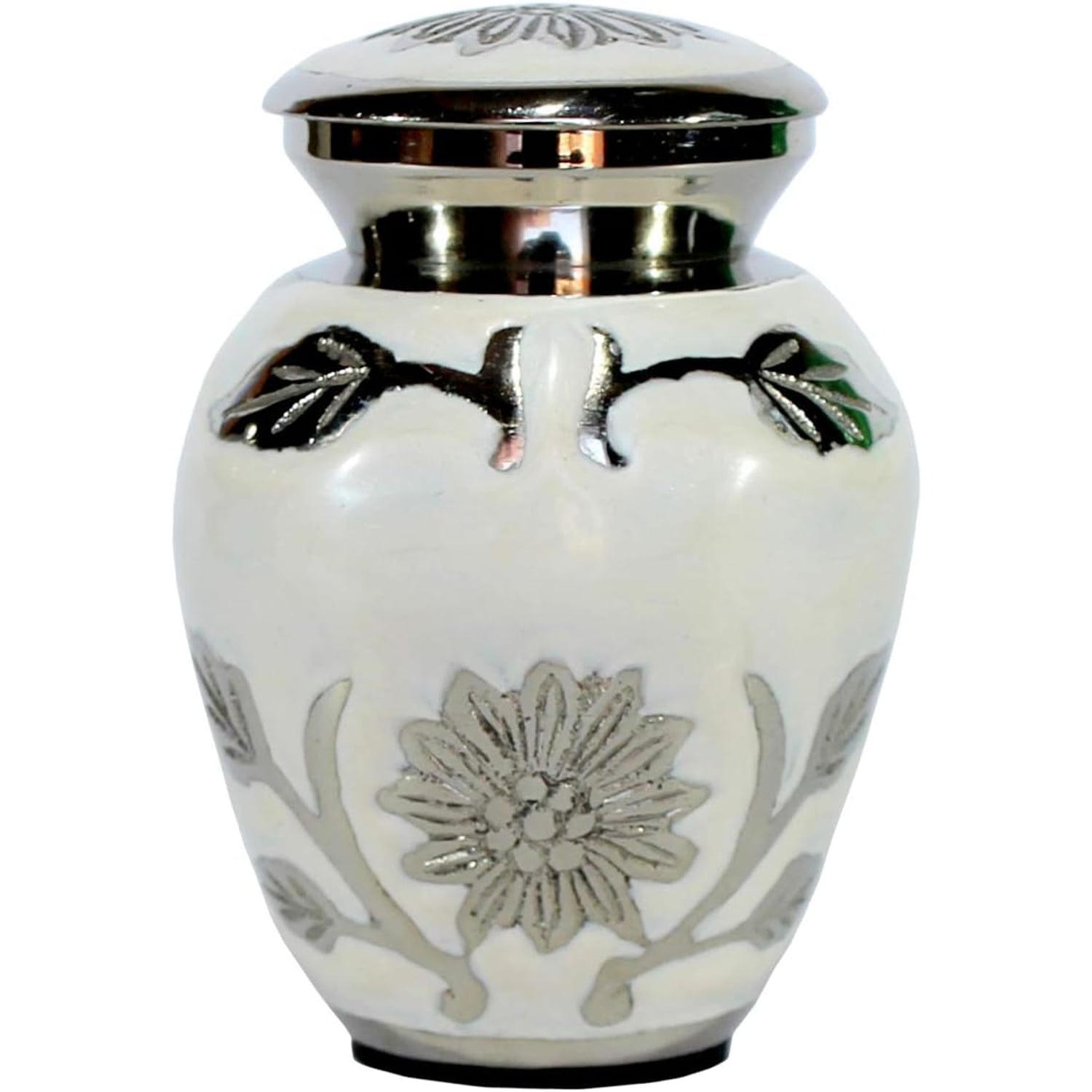
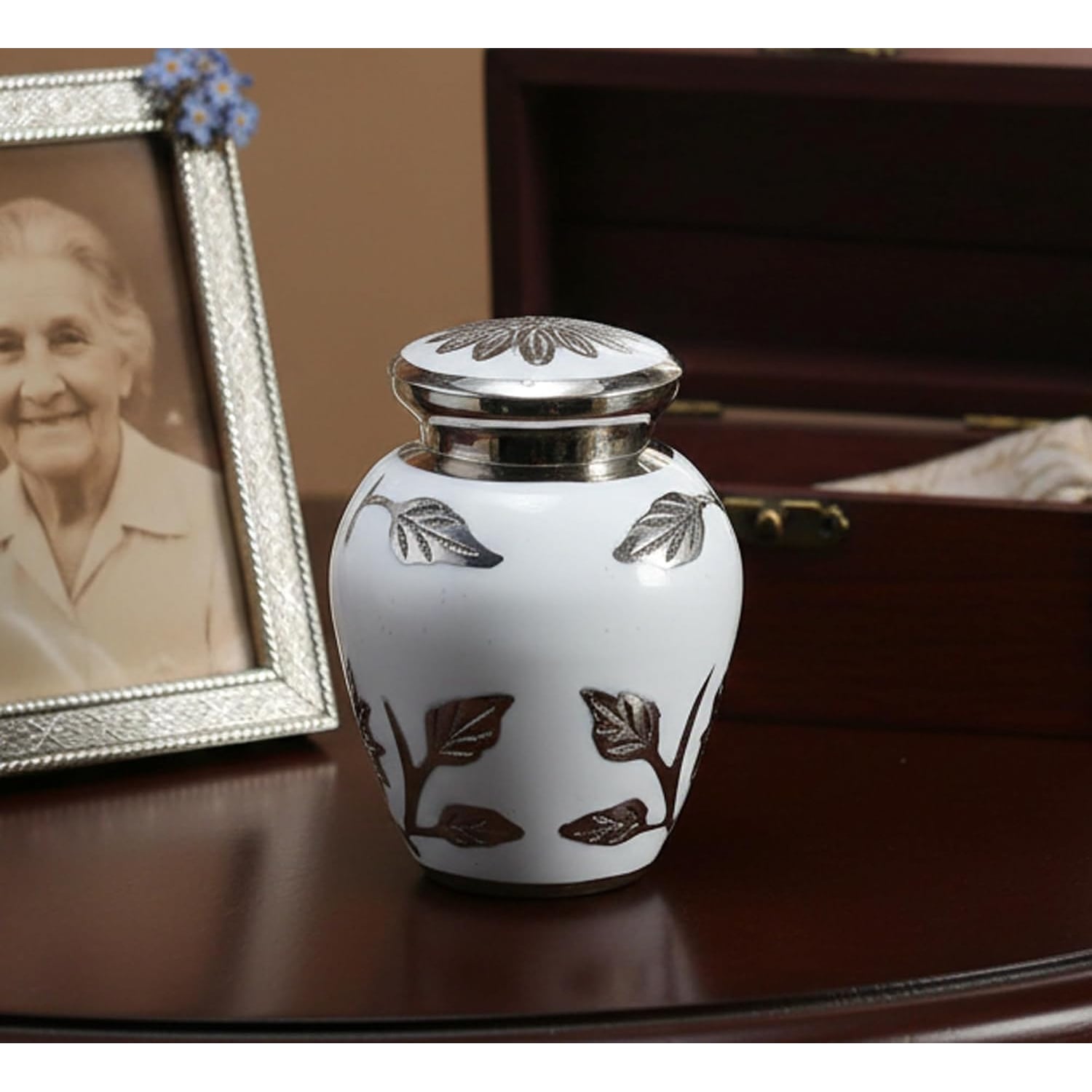
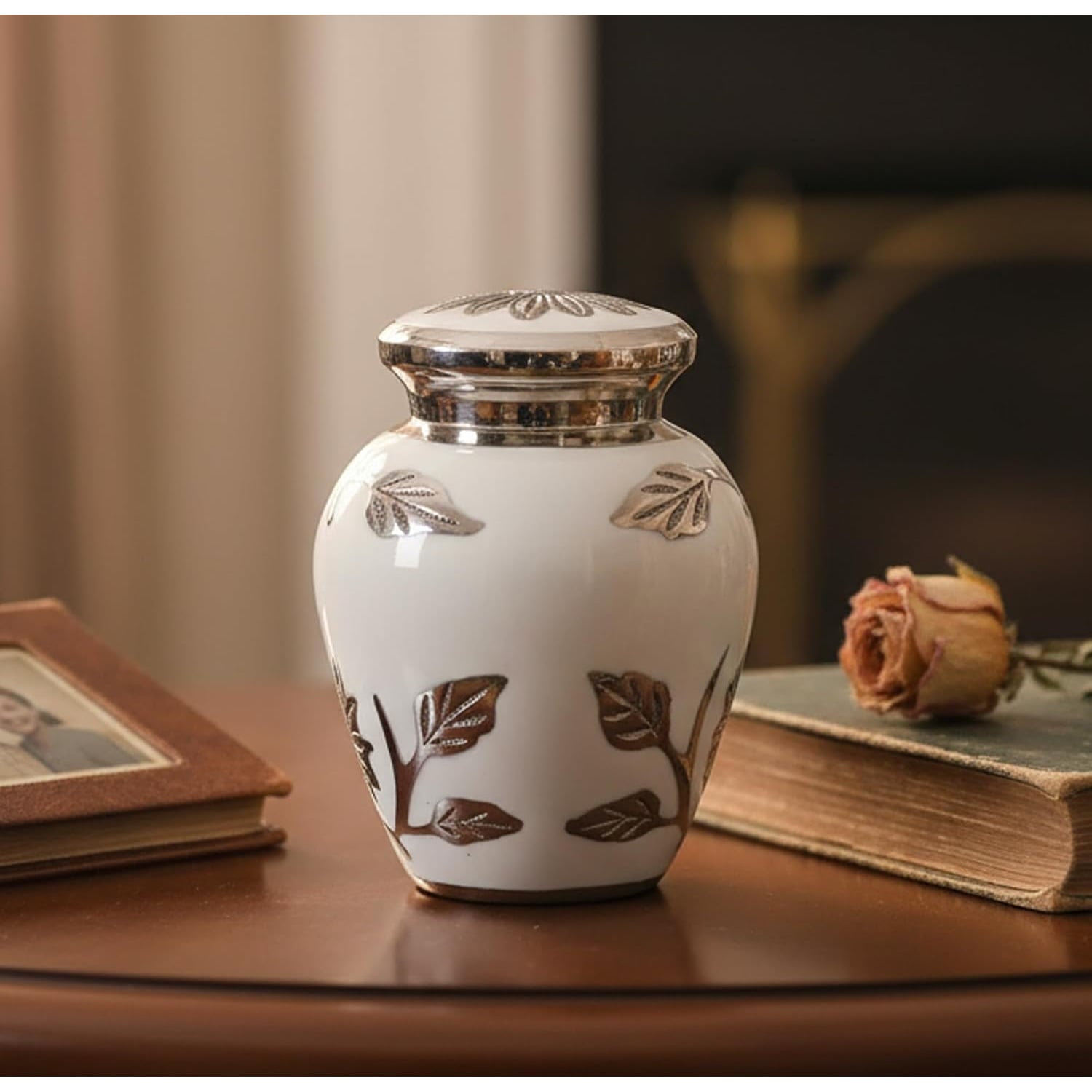
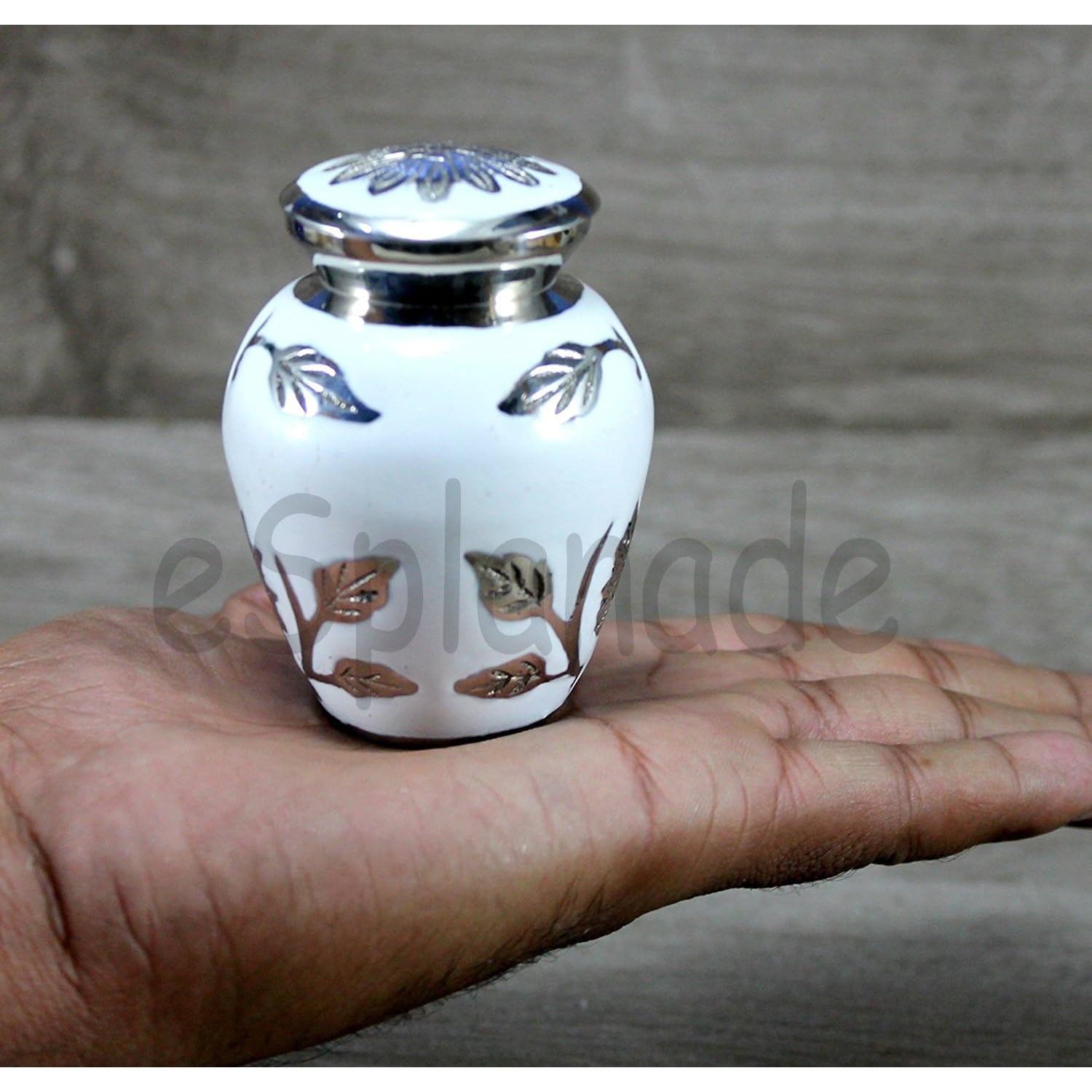
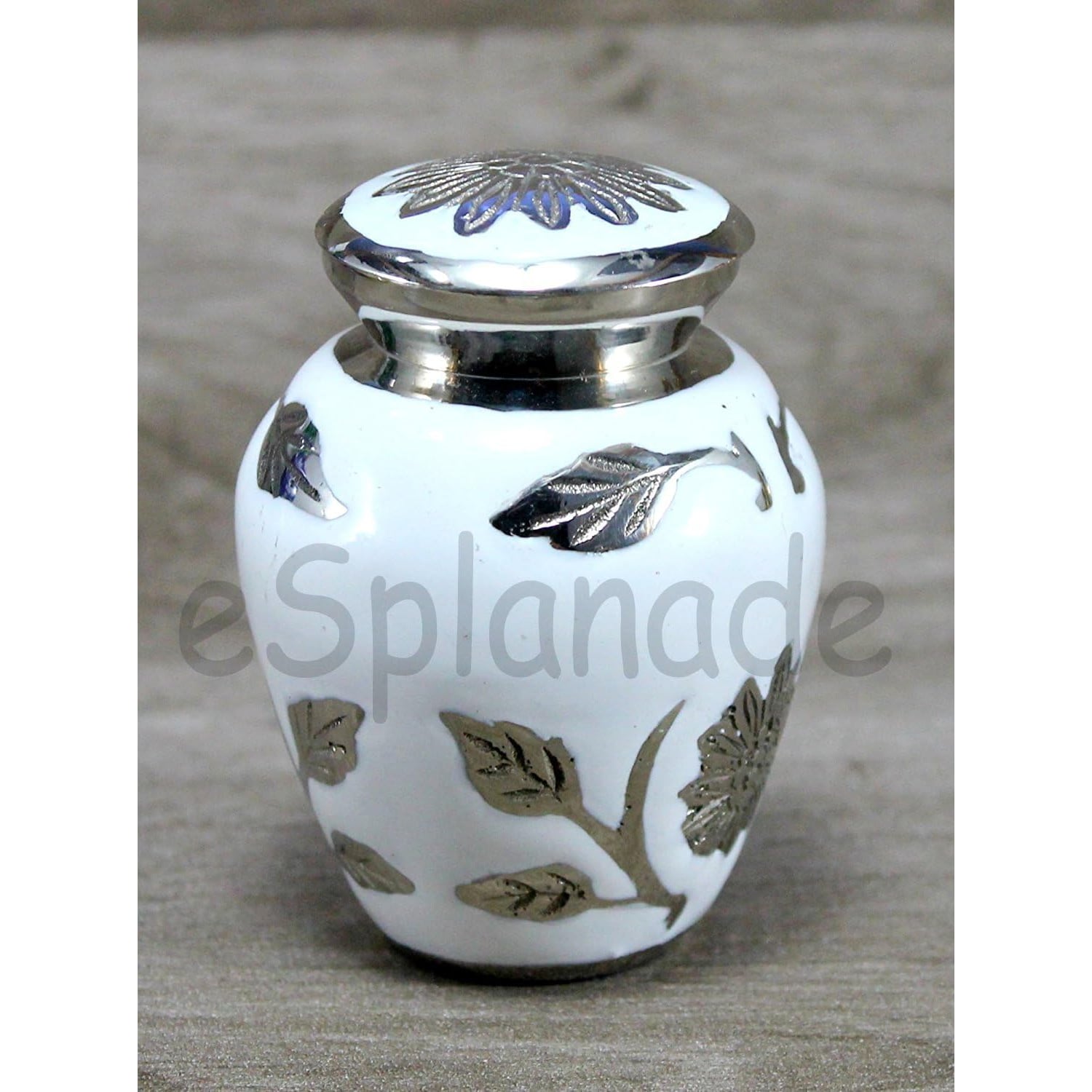
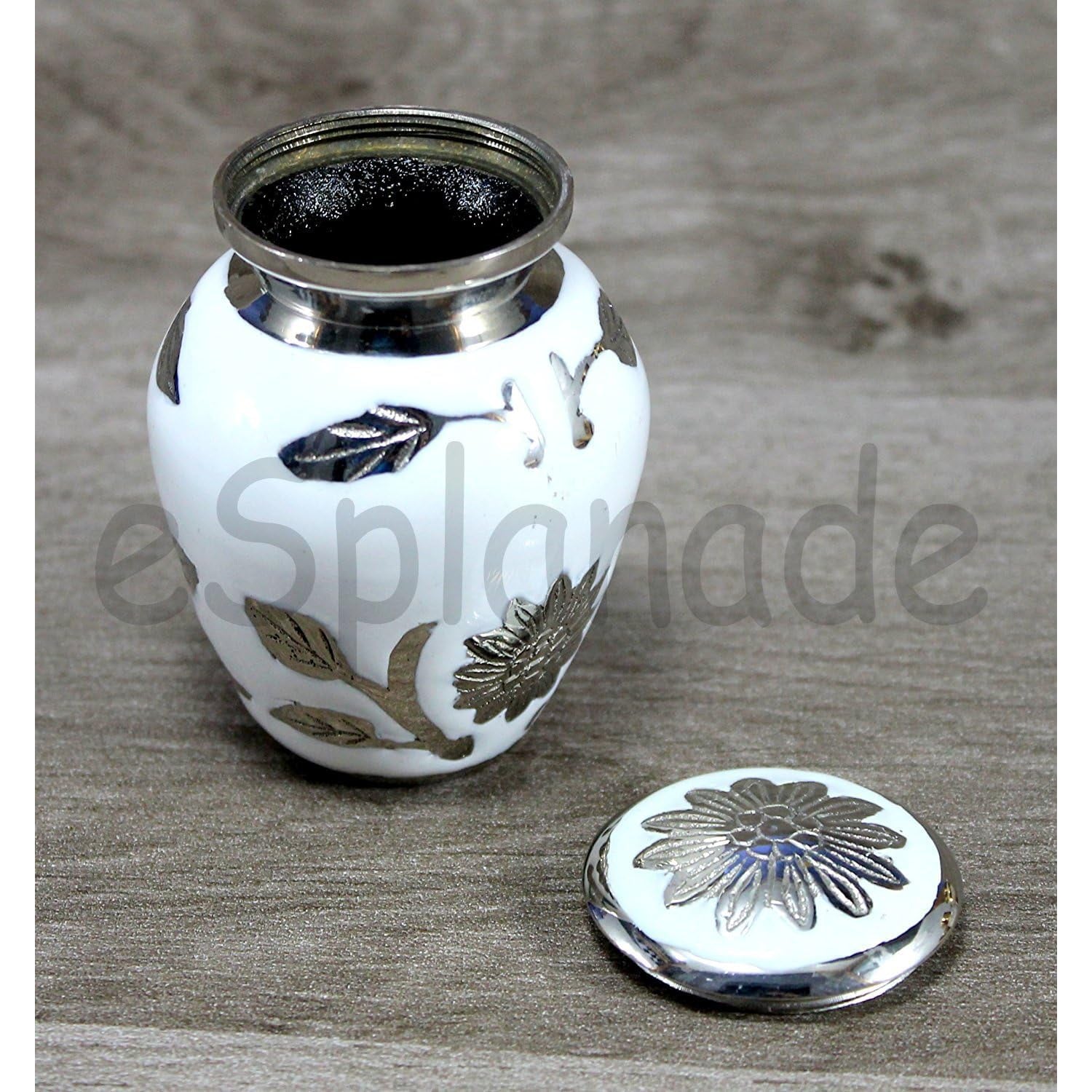
This piece is metal with a polished finish and a carved floral pattern across the body. The colour is listed as white. It stands about 7 cm high with a 5.5 cm diameter, and it weighs about 200 g. The top uses a threaded lid, so it screws on rather than pushing in. You open it by turning anti-clockwise.
Those details sound dry written out, but they are the ones that decide whether an urn works in your home or sits in a drawer. Size tells you where it can live. Weight tells you whether it travels. The closure tells you how confident you can feel picking it up.
Why people choose to divide ashes
There is no single reason, and all of them are normal.
Some families scatter most of the ashes at a place that mattered, a beach, a bush track, a garden, and keep a small amount at home. The scattering is the ceremony. The keepsake is the part that stays.
Some divide the ashes between adult children. When a parent dies and three siblings live in three different cities, one urn in one house is a quiet source of resentment. Three matching keepsake urns solve it before anybody has to raise it.
Some use a keepsake urn for a pet. A full-size urn for a cat or a small dog can look out of proportion, both to the animal and to the room. A pet keepsake urn at this scale feels right on a bedside table.
And some people simply want something they can hold. There is no requirement to explain that to anyone.
How to decide on size
Start with what the keepsake has to do. If it is the only container and it holds everything, you need a full-size urn, not this. If it holds a share, then a keepsake is the correct choice and 50 ml is a standard keepsake volume.
Next, think about where it goes. A small urn for shelf display wants a bit of clear space around it. Put a 7 cm tall object among tall books and it vanishes. Put it on a clear surface, in a cabinet or inside a shadow box with a photograph, and it reads properly.
Then count the people. If four family members each want one, order four. Matching pieces look deliberate rather than improvised, and it saves the awkwardness of someone getting a different one later.
Filling it, and the pouch trick
Crematoriums and funeral directors divide ashes into keepsake containers all the time. Ring ahead, tell them the capacity you have, and they will normally handle it. Some charge a small fee, many do not.
Whether they fill it or you do, the sensible approach is the same. Place the ashes in a small sealed pouch and set the pouch inside the urn. Two reasons. First, it keeps the interior clean, which matters more than people expect. Second, if the urn is ever passed to a grandchild, buried, or divided again, the contents lift out in one movement instead of needing to be tipped.
Close the threaded lid firmly. It should turn smoothly all the way down. If it feels gritty, wipe the threads with a dry cloth before trying again.
Travel, burial and the rules you need to check
Small urns travel easily at 200 g, but travel has rules. Airlines and customs authorities set their own policies on carrying cremated remains, and metal containers can be harder to screen than other materials. Check with the airline and the destination country before you book anything, and carry whatever paperwork the crematorium gave you.
Burial has rules too. Cemeteries and columbaria often specify what materials and sizes they accept in a plot or niche. A quick call to the office saves a difficult conversation on the day.
If permanent sealing is the plan, some families apply a small amount of adhesive to the lid threads. Just be clear with yourself that this is one-way. Once sealed, the urn cannot be opened again without damage.
Looking after a polished metal finish
This part is easy, and most of it is about what not to do.
Dust it with a soft dry cloth. If something marks it, use a barely damp cloth and dry it straight away. Skip the household sprays, the metal polishes and the abrasive pads, because all of them can dull a polished surface faster than ordinary handling ever will. It should never go anywhere near a dishwasher.
Keep it out of damp rooms. A bathroom shelf is the worst place for any metal keepsake urn. A living room, a bedroom or a study is far kinder. Away from direct heat and strong sunlight is better again.
Handled this way, a polished metal memorial urn tends to look the same in ten years as it did on the first day. That consistency is part of what you are buying.
Thinking about it as a gift
A keepsake urn can be a thoughtful thing to give, and it can also land badly, depending entirely on the person and the timing. Close family often appreciate it, especially when someone has quietly taken on the job of organising the division of ashes. People outside that circle usually should not assume.
If you are unsure, ask. A short conversation with the person who holds the ashes is better than a surprise parcel. If the answer is yes, ordering matching pieces for everyone at once is the kindest version of the idea.
The short version
This is a 50 ml metal keepsake urn with a polished finish, a carved floral pattern and a threaded lid that opens anti-clockwise. It stands about 7 cm high, has a 5.5 cm diameter and weighs about 200 g.
It is for holding a portion of ashes, not a complete set. That makes it right for sharing between family members, for keeping a little at home after a scattering, or for a pet. Use a sealed pouch inside, keep it dry, dust it gently, and check the rules before you travel or bury it.
If it turns out not to suit, send it back unused and we will sort it out. These are personal decisions and nobody should be stuck with the wrong one.