
The complete guide
Buying an Engraved Compass as a Gift, A Practical Guide
The gift problem this solves
Milestones are hard to shop for. A graduation, a retirement, a last day at a job, a child moving overseas: these are moments where the usual presents feel either too small or too awkward. Gift cards say nothing. Flowers are gone in a week. Another bottle of something sits in a cupboard.
A compass sidesteps all of that because the object itself carries the message. You hand someone a thing that points the way forward, and you do not have to say the sentimental part out loud. That is a relief for a lot of people, particularly dads, grandparents and older brothers who would rather die than deliver a speech.
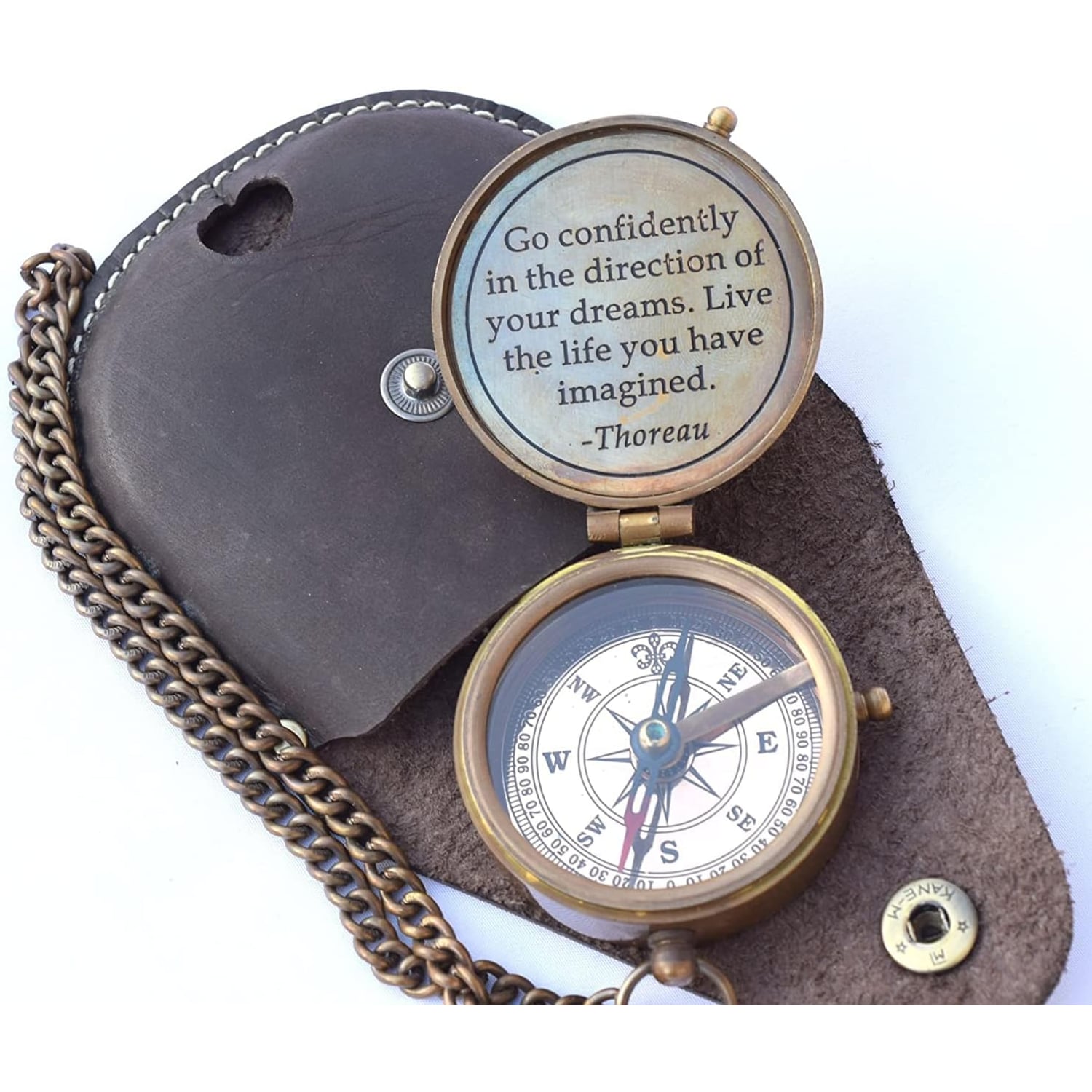
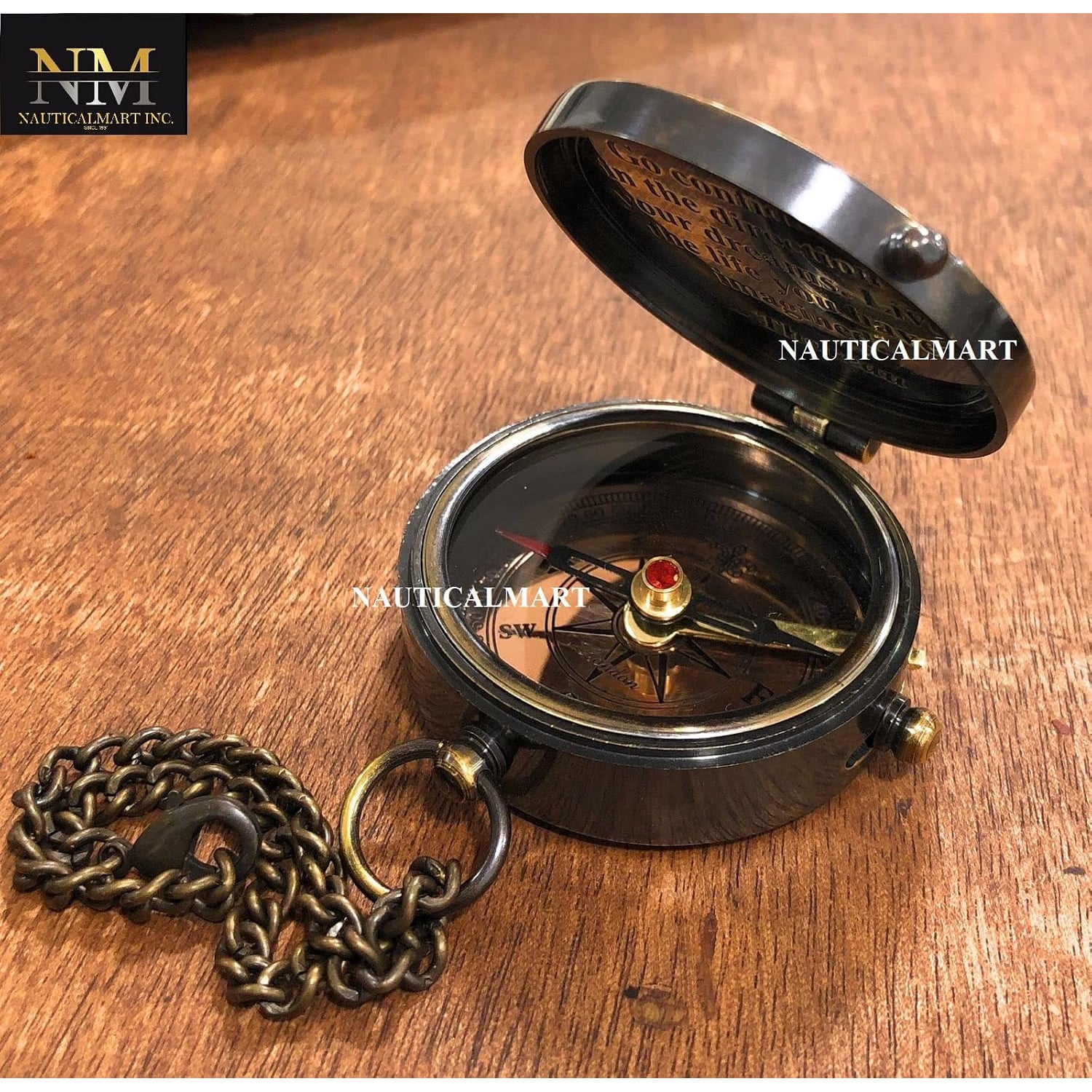
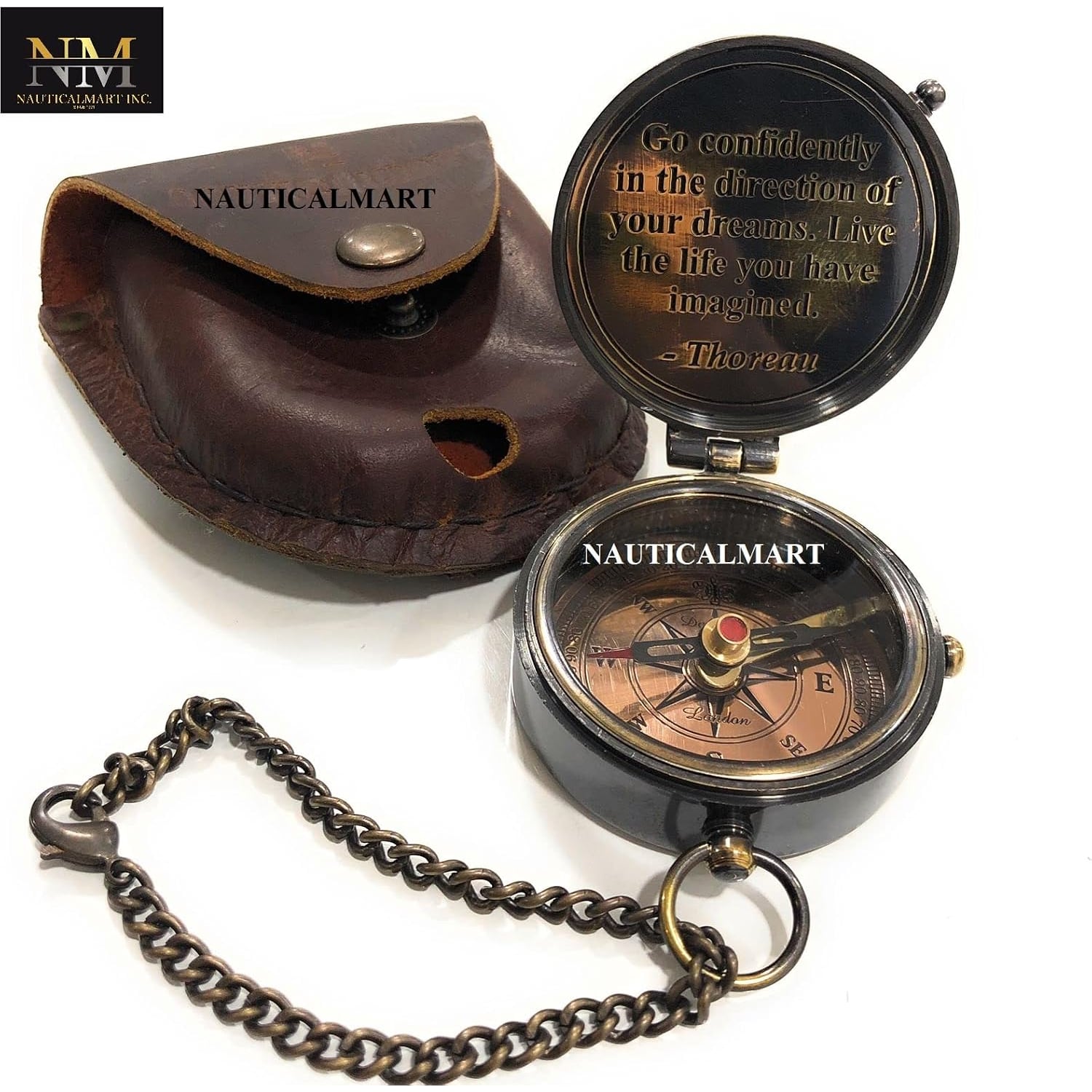
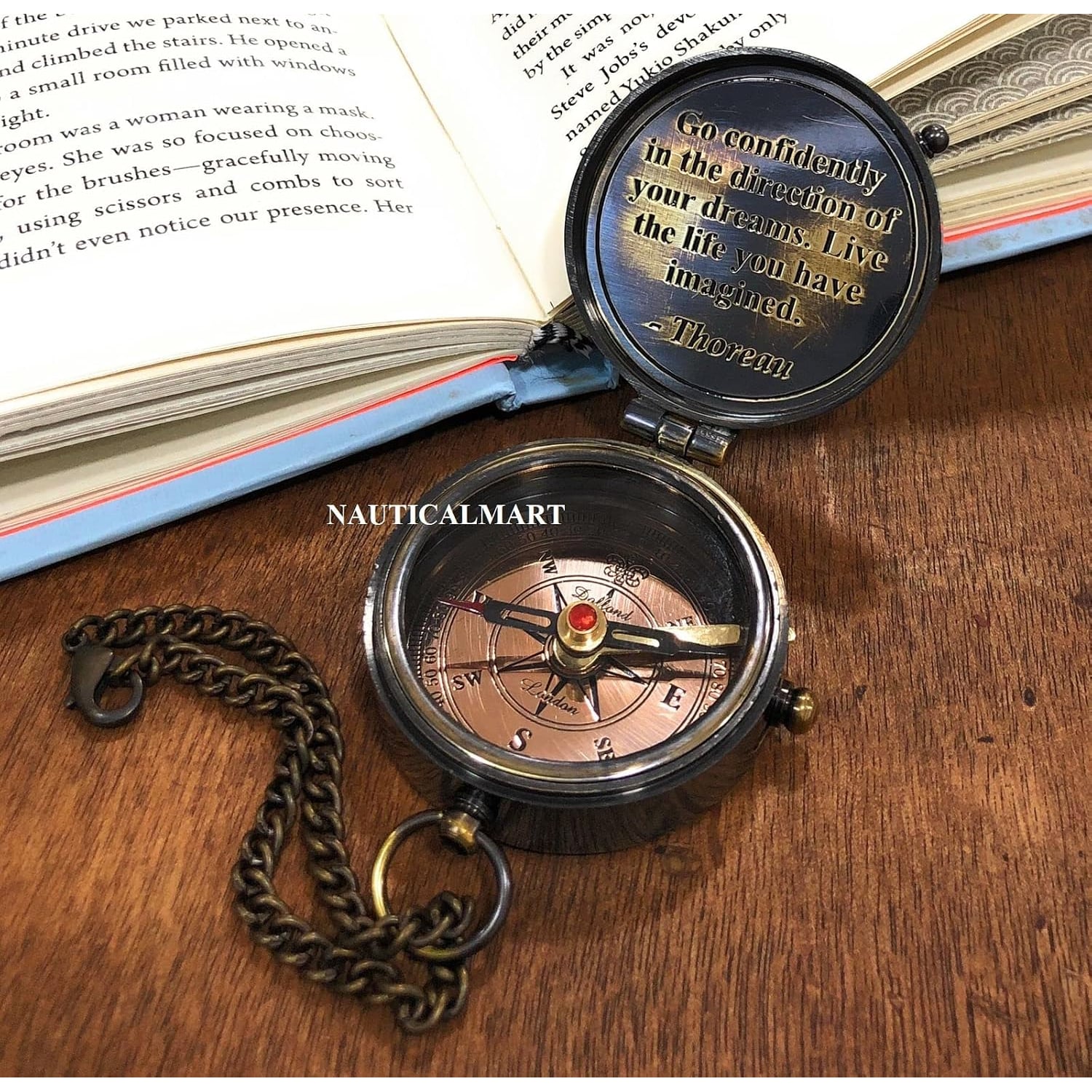
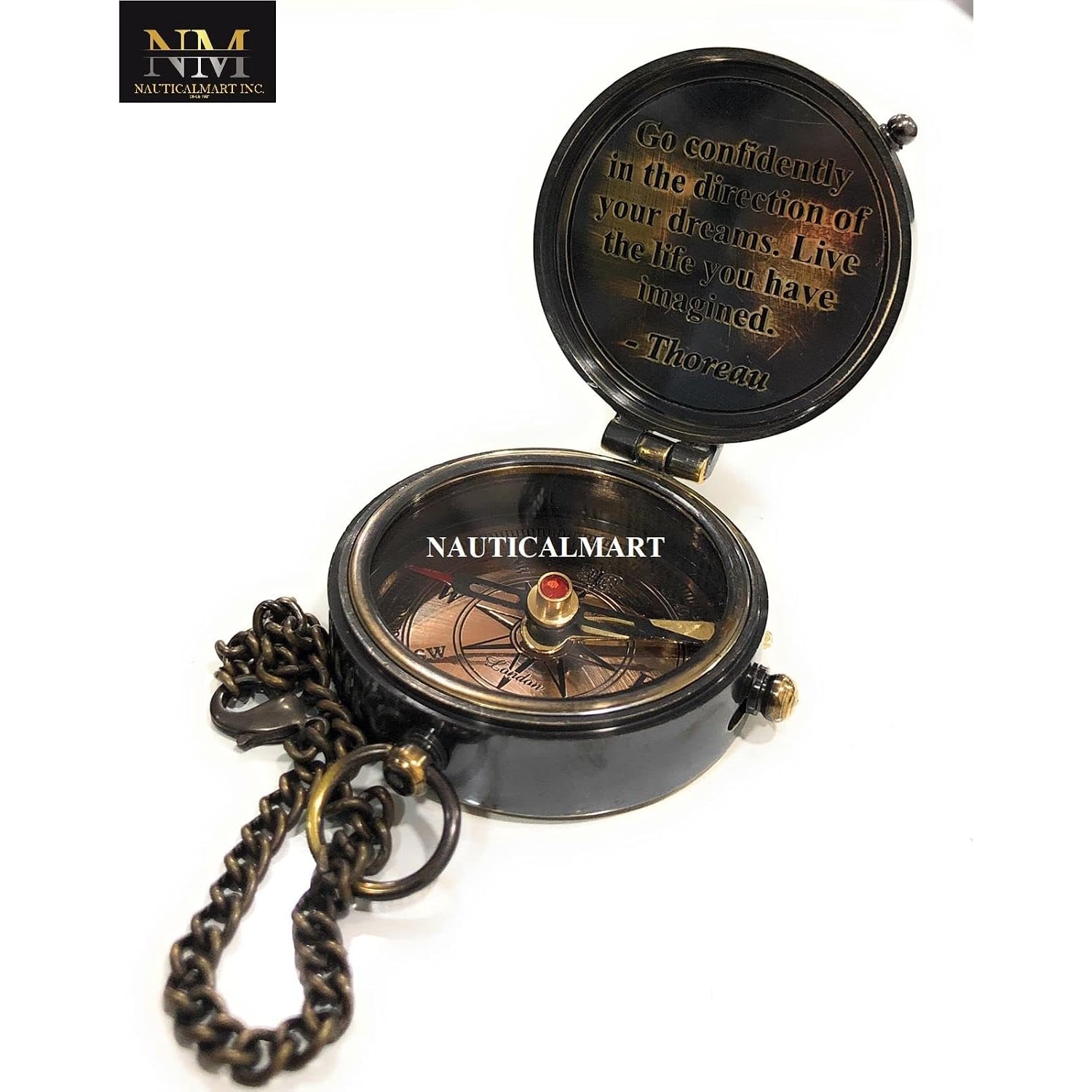
This one goes a step further. The passage from Henry David Thoreau is engraved under the lid, so the words are not on display, they are discovered. Every time the compass is opened, the line is there: go confidently in the direction of your dreams, live the life you have imagined. It is a quote that has aged well because it is not actually about travel. It is about choosing, and then committing.
What you are actually getting
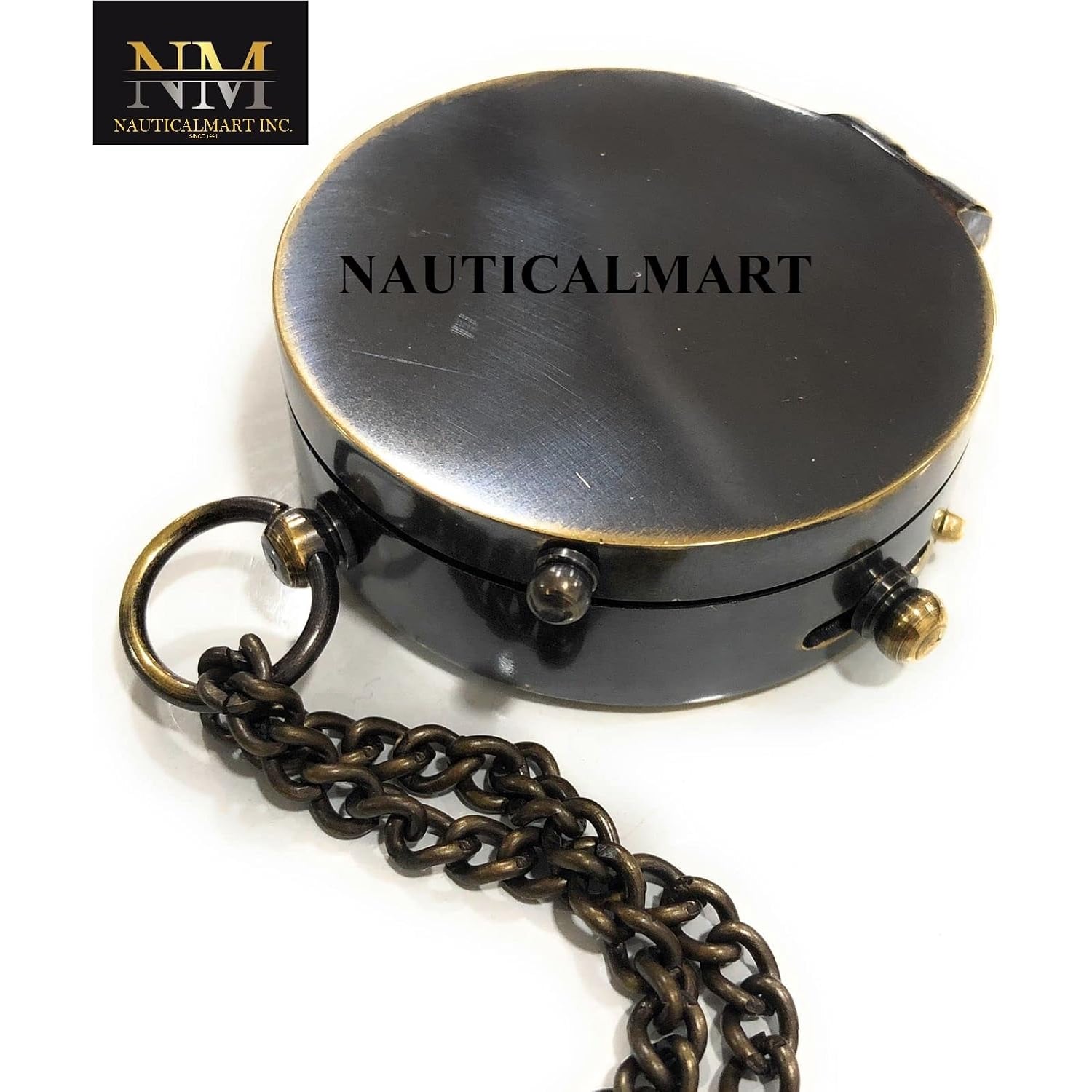
The body is solid brass with an antiqued finish. That finish matters more than people expect. A bright, freshly polished compass can look like a novelty item. An antiqued one looks like something with history, even on day one, and it only improves as the brass darkens with handling.
Inside, the mechanism is a jewelled needle. The term means the needle rides on a hardened bearing point rather than a soft one, so friction is low and the needle swings freely. In practice you get a reading that settles quickly instead of wobbling for half a minute before it makes up its mind. The dial is graduated in degrees, with the standard scale running from north and south. That means you can read a bearing as a number, write it down, and walk it.
There is also a small lever on the side. It lifts the needle clear of its pivot. This is an old-fashioned touch that most modern compasses have dropped, and it is genuinely useful. A compass bearing wears out mostly from being bounced around while it is not in use. Lift the needle before the compass goes into a pack, drop it back down when you want a reading, and the movement lasts far longer.
The compass measures 50 mm across and 18 mm deep. The leather case is 8.9 by 8.9 by 2 cm, which keeps the glass away from keys and coins and makes the whole thing feel considered when you hand it over.
Why cut engraving beats printed text
If you have ever bought an engraved gift online, you have probably received something where the writing is printed on, or laser-darkened on the surface. It looks sharp in photos. Then it spends a year in a pocket and the letters start to ghost.
This compass is engraved with a diamond-tipped rotary drag engraver. The tool physically cuts a groove into the brass. The letters have depth you can feel with a thumbnail. That is the difference between a finish and a feature. Decades from now, when the brass has gone dark and someone finds it in a drawer, the quote will still be legible.
It is a small manufacturing detail, but it is the one that decides whether the thing becomes an heirloom or ends up thrown out.
Who it suits
Graduates are the obvious match, and the quote was practically written for them. Someone finishing a degree and facing the question of what next will read that engraving properly, maybe not on the day, but at some point in the following year when they need it.
New jobs and promotions work the same way. So do farewells, whether that is a colleague leaving, a friend moving overseas, or a family member starting again after something difficult. People searching for the best gift for a new job often end up here because a compass makes the point without being heavy-handed.
Retirement is the surprise category. The same words read completely differently at sixty-five than at twenty-two, and arguably better. The life you have imagined is finally available.
Then there are the walkers, scouts, sailors and map readers who will use it as an instrument as well as a keepsake. For anyone hunting the best explorer gift, a working compass beats a decorative one every time, because it will actually be carried.
Weddings too. A set handed out to the wedding party, or a single one given to a partner before a big move, both land well.
Is it enough compass for real navigation?
Honest answer: for what most people do, yes. Finding north, orienting a map, following a track bearing across open ground, teaching a kid how declination works, checking which way a street runs in an unfamiliar city. The jewelled needle and degree graduations handle all of that.
For technical off-track navigation, serious orienteering or search and rescue work, people carry a baseplate compass with a transparent body, a sighting line and a ruler scale, because those are faster to use directly on a map. This is a traditional lidded pocket compass, so it does not have a baseplate or a mirror.
Think of it as the compass you carry because you like it, and which happens to work properly, rather than the specialist tool in the bottom of a rescue pack. Plenty of people carry both.
Looking after it
Brass and leather both reward a little care, and neither needs much.
Keep it dry. The compass is not described as waterproof, so it is a pocket and daypack item, not a river crossing item. If it gets wet, dry it straight away with a soft cloth and leave the case open to air out.
Use the needle lift when it goes into storage or into luggage. That one habit does more for the movement than anything else.
Keep magnets away. Phone cases with magnetic closures, speaker magnets, magnetic tool trays and car dashboards with hidden magnets will all pull the needle around. Step a couple of metres clear before taking a reading if the result looks odd.
Let the brass age. The antiqued finish is meant to darken. A dry cloth buff will lift the high points if you want a bit more contrast, but polish and chemical cleaners will strip the finish and leave you with a bright yellow compass that no longer matches the engraving.
Choosing between options
If you are comparing engraved compasses, the three things worth checking are the metal, the engraving method and the needle.
Solid brass has weight. Plated zinc alloy does not, and it chips at the edges. If a compass is cheap and light, that is usually why.
Cut engraving lasts. Printed does not. Ask, or look for the word rotary or diamond-tipped in the description.
A jewelled needle settles fast and keeps settling fast for years. A plain pivot gets sticky. If a compass needle hunts back and forth for a long time before stopping, the bearing is doing badly.
After that it comes down to whether you like the quote, and whether a case is included. Here the lid is plain on the outside, the Thoreau passage sits underneath, and the leather case comes in the box.
The short version
This is a working brass pocket compass that happens to be a good gift, rather than a gift that pretends to be a compass. Jewelled needle, degree-graduated dial, needle-lift lever, antiqued solid brass, 50 mm across, leather case included, Thoreau's line cut permanently into the metal under the lid.
Give it to someone at a turning point. They will open it more than once.