
The complete guide
Choosing an Engraved Antique Trinket Box That Actually Gets Used
The problem with jewellery and flat surfaces
Jewellery has a way of scattering. Earrings come off at the kitchen sink, a ring goes beside the bathroom tap, a necklace gets dropped on the dresser at midnight and is a knot by Thursday. None of it is carelessness. It happens because there is no obvious place to put things down, so the nearest flat surface wins.
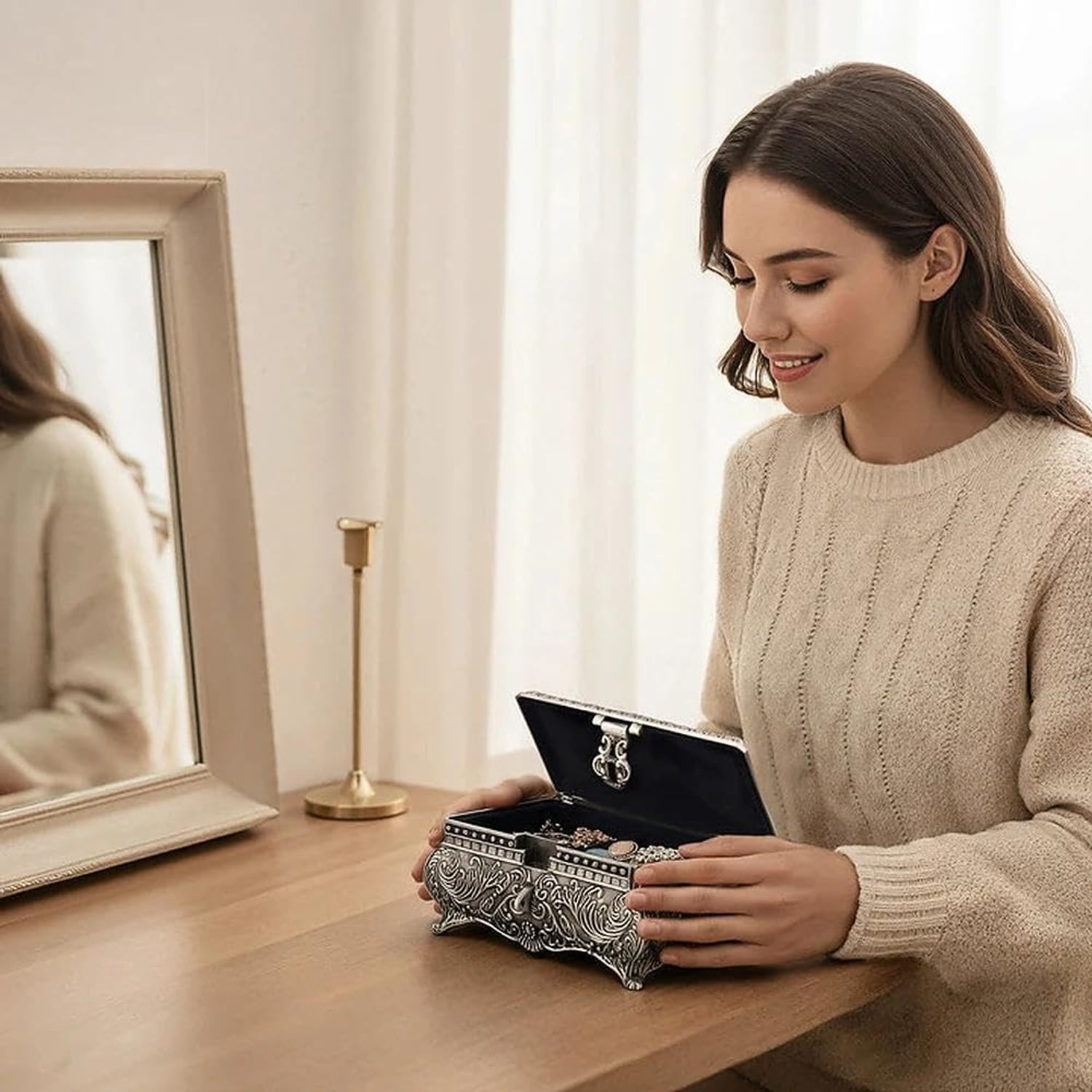
A trinket box fixes that with almost no effort from you. It gives small valuable things a single destination. Once the box is there and the lid is open, putting a ring in it takes less effort than leaving it on a shelf, and that is the whole trick. Storage only works when it is easier than the alternative.
The second problem is damage. Loose jewellery in a drawer rubs against itself. Chains tangle with other chains. A stone ring sitting against a polished watch case will eventually leave a mark. Compartments and a lid solve both at once.
What this box is
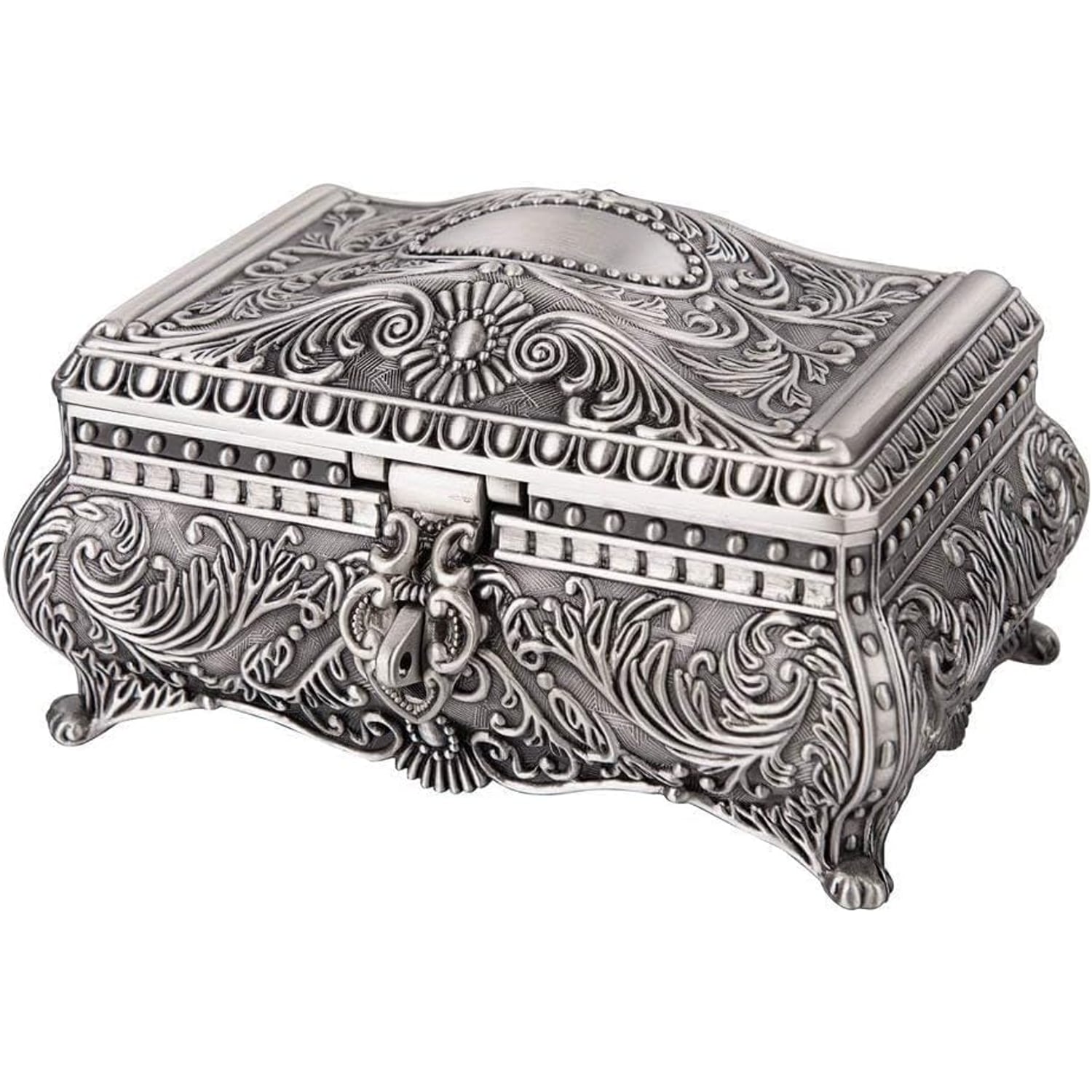
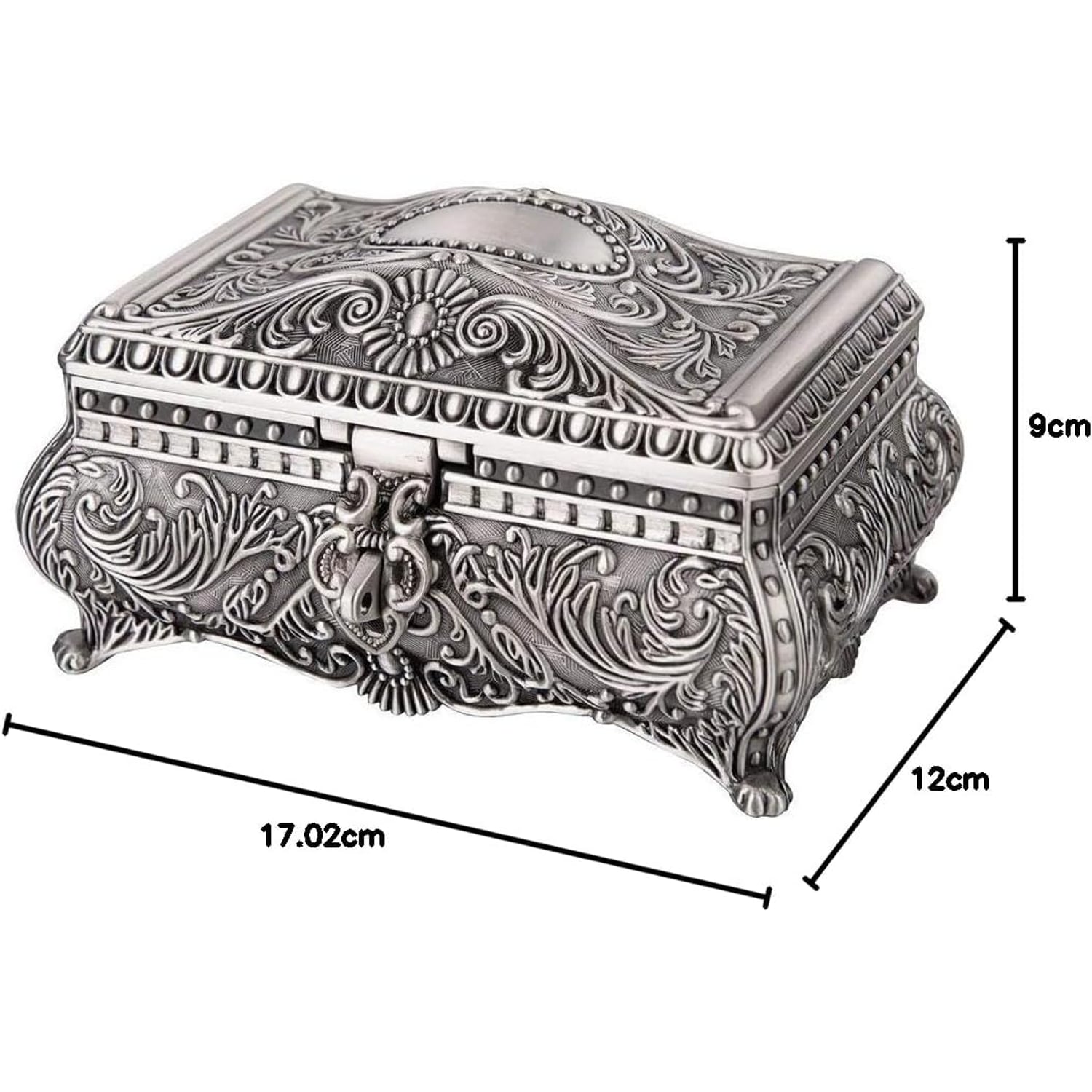
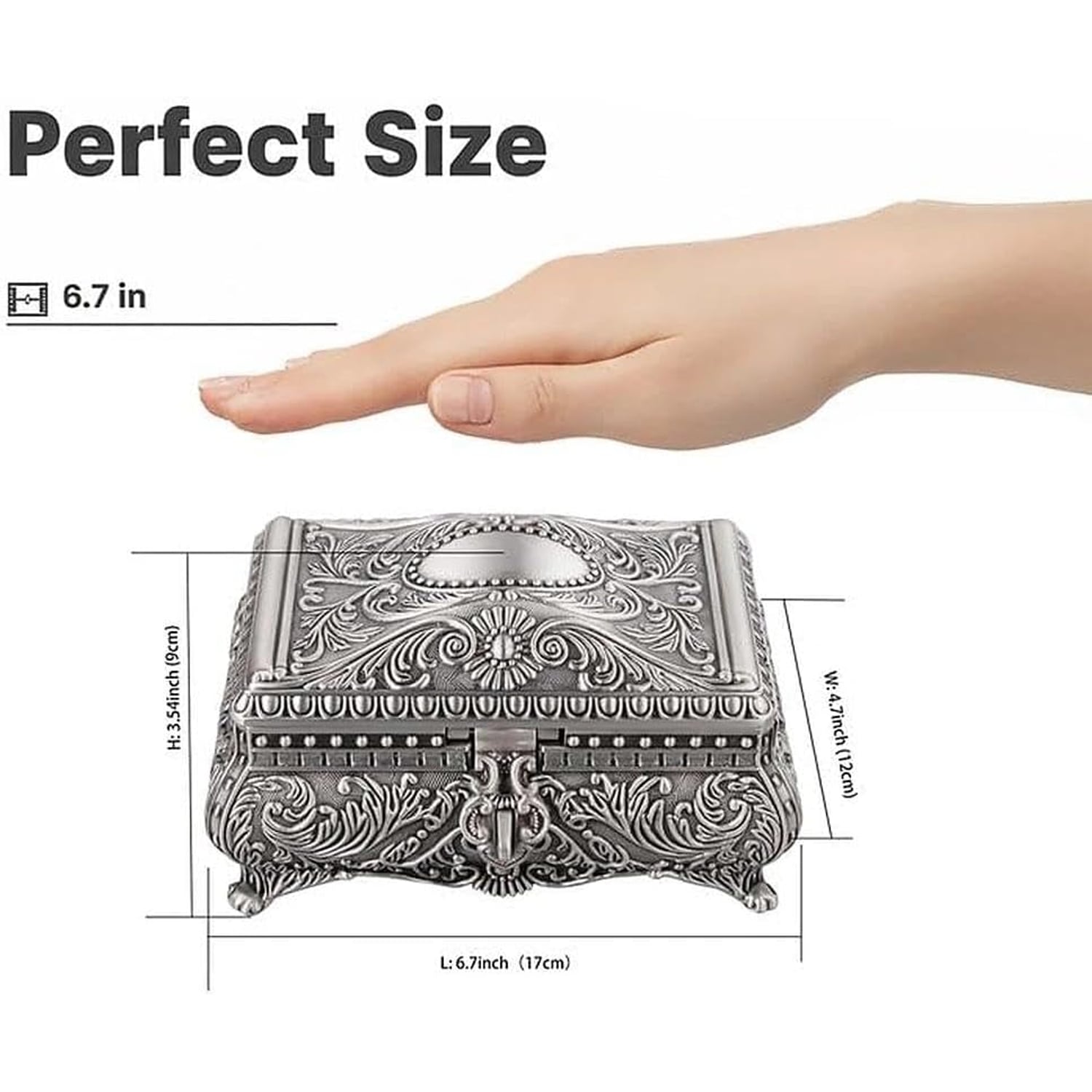
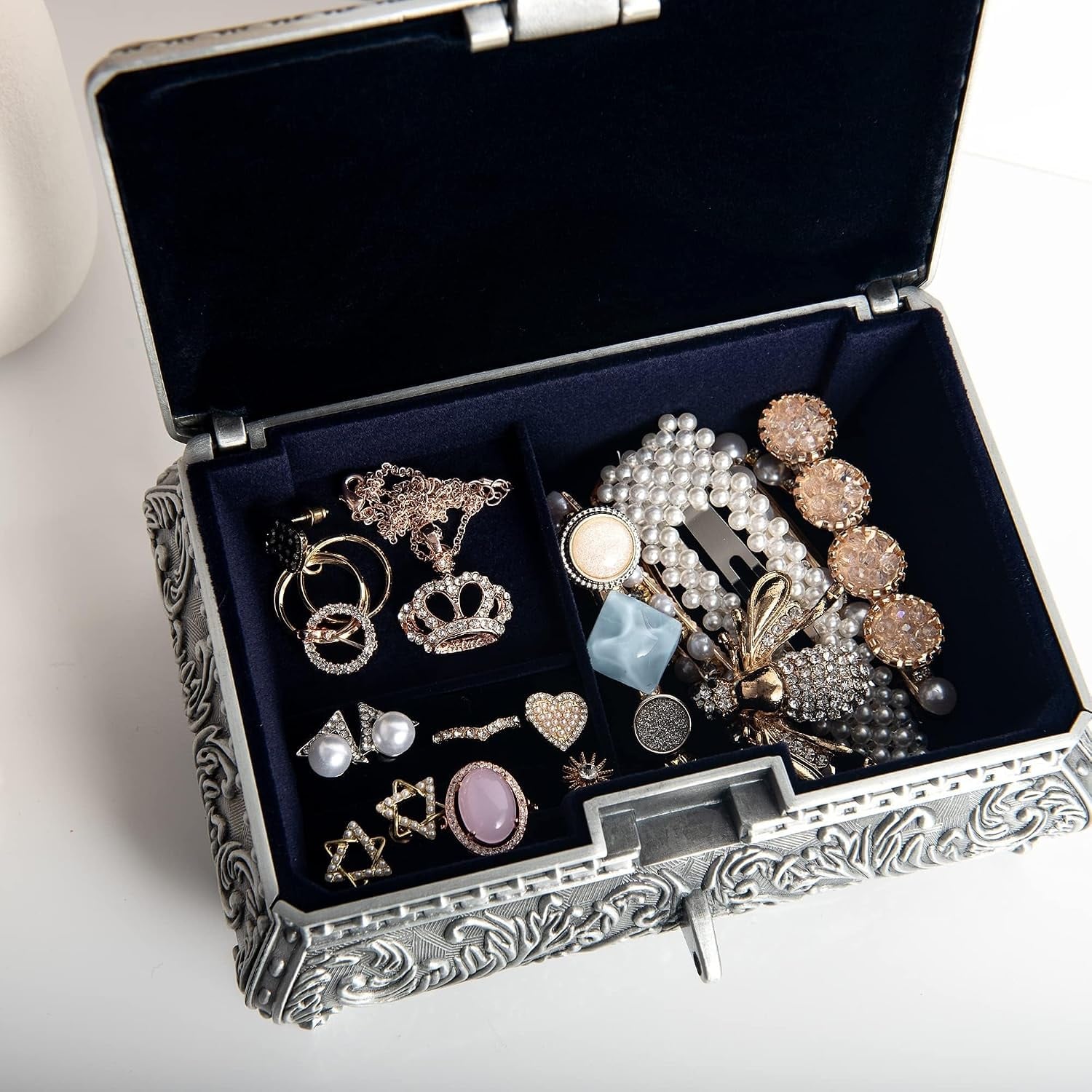
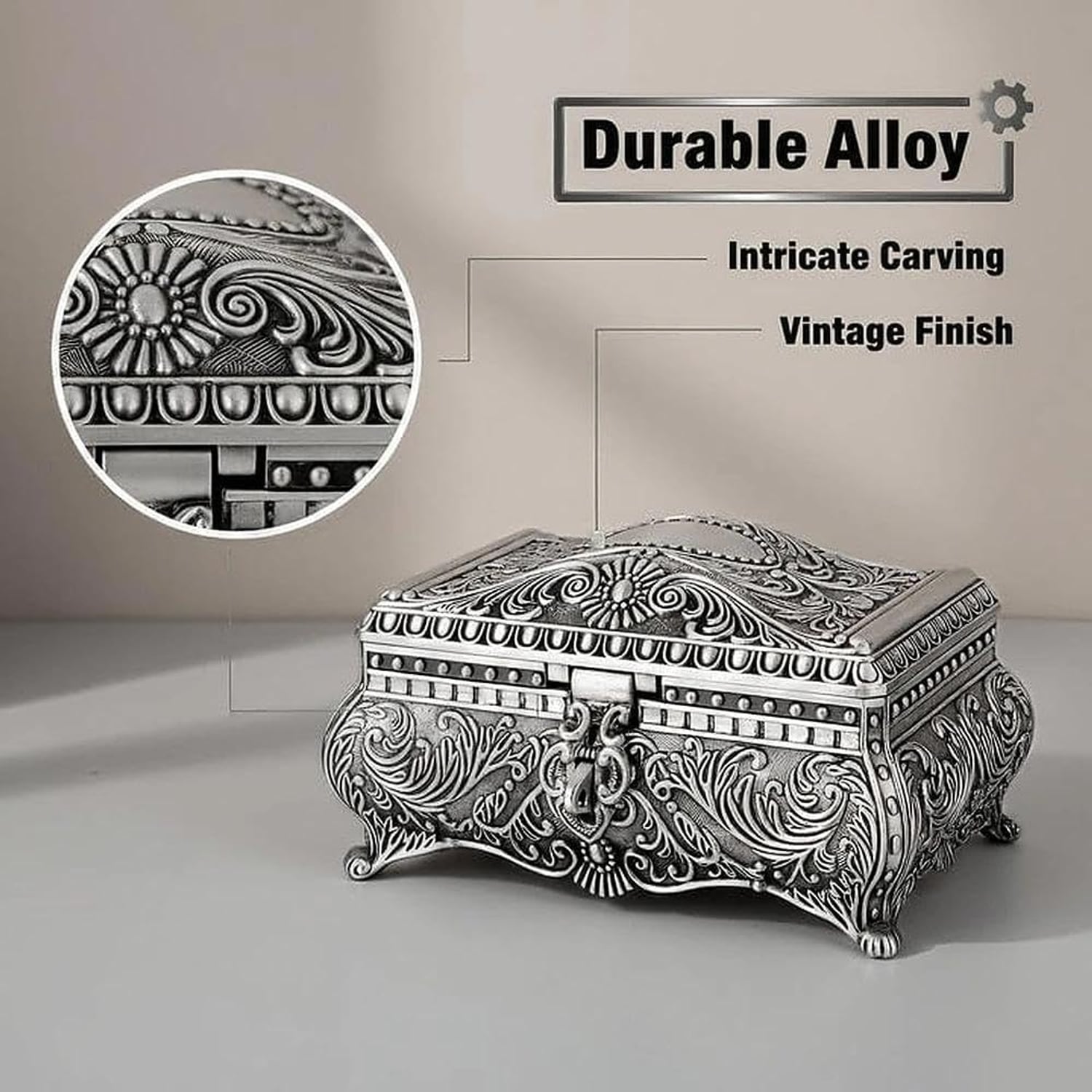
This is an engraved antique trinket box made from zinc, finished in a textured silver tone with a floral engraved surface. It measures 11.9 cm deep by 17 cm wide by 8.9 cm high, and the listed weight is 0.91 kg. Inside there are two compartments with dividers. The lid closes with a metal buckle, and that buckle will take a small padlock, though no padlock comes with it.
The style is deliberately retro. The engraving sits on the lid and sides rather than being printed on, which is why it catches light the way it does. It is sold as a tabletop box, meaning it is designed to be seen, not tucked away in a wardrobe.
That is the full honest picture. There is no inner tray to lift out, no mirror, no jewellery roll. It is a well-made metal box with two sections, and for most people that is exactly the right amount of box.
How the compartments change things
Two compartments sounds modest until you use them. The usual split is small and hard on one side, larger and softer on the other. Rings, studs and a pair of cufflinks go in the first. A watch, a bangle and a couple of chains go in the second.
That single division does most of the work. The pieces most likely to scratch something are kept away from the pieces most likely to be scratched. And because you always put the same category in the same place, you stop hunting. Open the lid, look left, there is the ring.
If you want finer sorting inside a jewellery box with compartments, small drawstring pouches are the cheapest upgrade going. One pouch per fine chain means zero tangles, forever. Fold a soft cloth into the base if you want extra padding under a watch.
Who it suits
It suits someone with a working collection rather than a vast one. If you wear the same six or eight pieces most weeks, plus a watch and a couple of special items, this is the right size. If you own several hundred pieces, you want a cabinet, not a trinket box.
It suits people who want the storage to look like something. A plain plastic organiser disappears into a drawer. An antique jewellery box in engraved metal sits on a dresser and earns its space visually. That matters in a small bedroom where every surface is doing double duty.
It also suits gift buyers who do not know sizes. A gift for her is risky when it involves fit, colour or taste in jewellery. A box sidesteps all of that. It is useful on day one, it does not need to be the right size, and it keeps being used years later.
And it suits keepsakes. Plenty of these boxes never hold jewellery at all. They hold a child's first tooth, old coins, concert tickets, a lock of hair, military medals, a grandparent's watch that no longer runs. A keepsake box does not need compartments for diamonds, it needs a lid that shuts and a surface worth looking at.
How to choose between boxes
Start with the footprint. Measure the spot where it will live before you order anything. A box that is 2 cm too wide for a bedside table is a box that ends up on the floor. 17 cm wide suits most dressers and all but the narrowest nightstands.
Then think about material. Wood is warmer and quieter but dents and scuffs. Fabric-covered boxes look soft and stain over time. Metal is the most durable of the three, holds engraved detail best, and has weight, which stops it moving when you open the lid. The trade-off is that metal is colder to the touch and slightly louder when you shut it.
Next, look at the closure. A hinged lid with no catch will flop open in a bag. A locking buckle stops that and lets you add a padlock if you want one. Be realistic about what a buckle is, though. It is a deterrent and a catch. It is not security for high-value pieces, and no small decorative box should be treated as if it were.
Finally, consider the finish. An antique-style finish is forgiving. Fingerprints and small marks blend into the texture instead of showing up like they do on a mirror polish. On a box you open twice a day, that is a practical advantage, not just a look.
Care that actually matters
Metal boxes are low maintenance, but there are two things worth doing properly.
First, keep it dry. Damp is the enemy of both the finish and whatever is inside. Bathrooms, windowsills that get condensation and laundry shelves are all poor choices. A bedroom dresser or a hallway shelf is better.
Second, clean it gently. A soft, dry cloth is all the outside needs. Skip household sprays and metal polish, because both can dull or remove an antique finish that was never meant to be shined up. For the engraving, a dry soft brush lifts dust out of the grooves better than any cloth will.
Inside, use a lint roller or a soft brush instead of water. Do not soak or wash the lining. If something spills, blot immediately and leave the lid open until it is completely dry before closing it.
One extra tip for silver jewellery. Drop an anti-tarnish strip into the compartment and replace it every few months. A closed box slows tarnish, but air still gets in, and a strip costs very little for how much polishing it saves.
Making it a good gift
If you are buying it as a gift, a small amount of effort changes how it lands. An empty box is a nice object. A box with something inside it is a moment.
The easy version is a single piece of jewellery resting in one compartment. It does not have to be expensive, it has to be chosen. The other version costs nothing at all, which is a handwritten note folded into the base. For a wedding or an anniversary, people keep those notes for decades.
If the recipient is likely to travel with it, mention the buckle and suggest a small padlock. It takes the box from decorative to practical for them in one sentence.
The short version
This is a solid metal trinket box with engraved detail, two compartments and a buckle closure, sized at 17 x 11.9 x 8.9 cm. It holds a working jewellery collection, keeps pieces from scratching each other, and looks like an object rather than a container.
Buy it if you want everyday jewellery to have one home and you would rather that home sat out in the open. Buy it as a gift if you want something that is useful immediately and still useful in ten years. Skip it if you need lockable security or you own more jewellery than two compartments can hold.
Measure your space, keep it dry, wipe it with a dry cloth, and it will outlast most of what goes inside it.