
The complete guide
Choosing an Engraved Whisky Glass for Your Father-in-Law
The gift problem nobody warns you about
Buying for a father-in-law is its own specific kind of difficult. You know him well enough to sit at his table at Christmas, but maybe not well enough to know his jumper size, his politics on golf clubs, or whether he actually liked the whisky you brought last year or was just being polite. He is also likely at the stage of life where he buys himself anything he genuinely needs, which means the usual shortcuts of socks, tools and gadgets all land with a thud.
Glassware solves this better than most categories, and engraved glassware solves it better still. A whisky glass is useful in a way that does not demand anything of him. He does not have to find space for it, learn how it works, or pretend to be enthusiastic. He pours a drink into it on a Friday, and the message is there without anyone having to make a speech.
What makes an engraved glass different from a printed one
This is the part most people never think about until a year later, when their nicely decorated glass has gone patchy around the lettering.
Printed glassware carries its design on the surface. Paint, enamel or a transfer sits on top of the glass and is held there by heat or adhesive. It looks great in the photo. Then it goes through a few dozen washes, gets stacked against other glasses, and the edges start to lift. Dishwashers accelerate this dramatically. Within a year or two, what was a crisp message becomes a faded smudge.
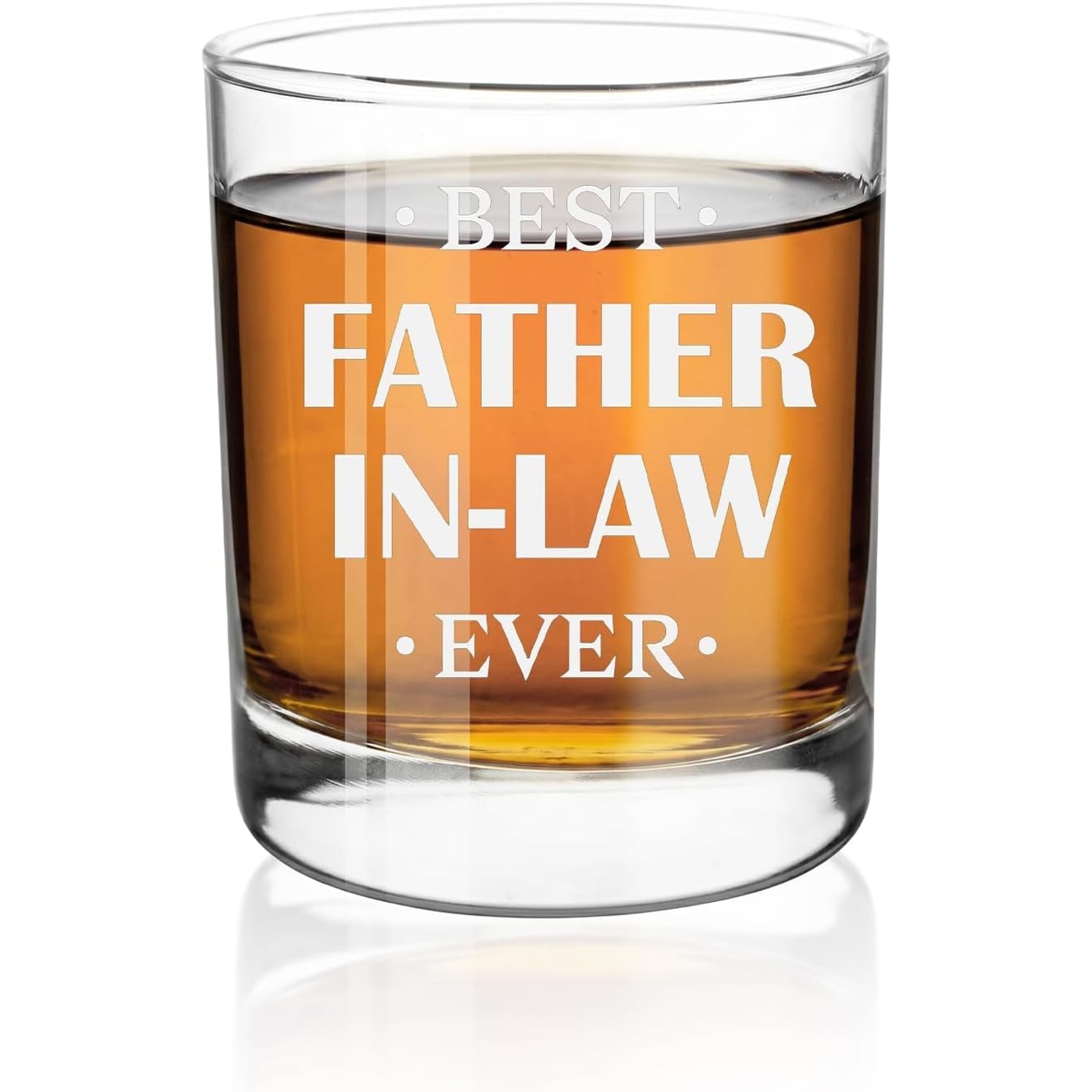
Engraving cuts into the surface instead. The mark is a change in the glass itself, not an extra layer sitting on it. There is nothing to peel because nothing was ever stuck on. That is the practical reason an engraved whisky tumbler outlasts a printed one, and it is the reason this style has stayed the default for commemorative glassware for decades.
The visual effect is different too. Engraving creates a frosted, slightly recessed look that catches the light at an angle. It reads as understated rather than loud. For a man who would be quietly embarrassed by something too flashy, that restraint matters.
The size question, and why 10 ounces is the sweet spot
This glass holds 300 ml (10 ounces) and measures 7 cm across by 8.5 cm tall. If those numbers mean nothing to you, here is the translation: it is a classic rocks glass, the same general shape you see behind every decent bar.
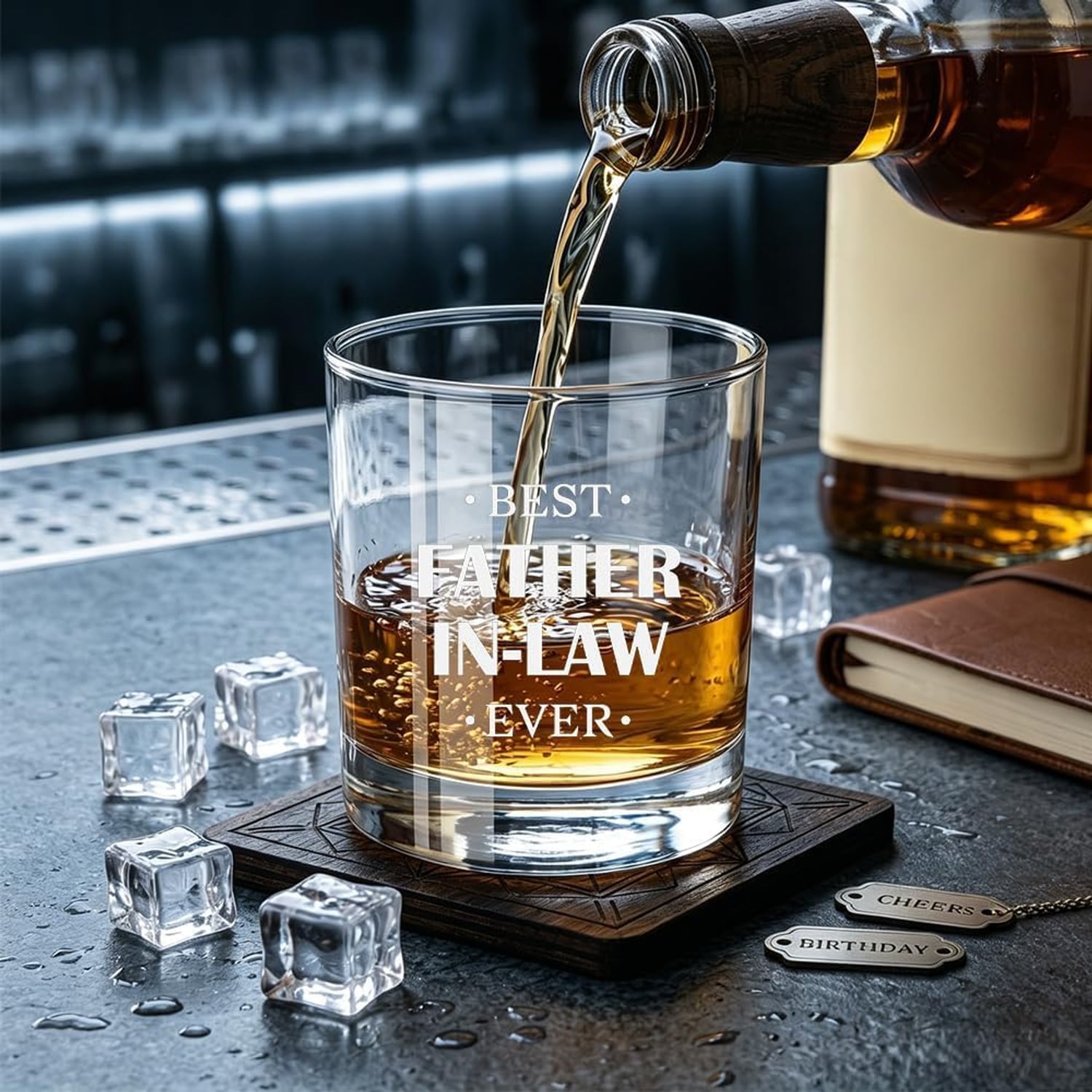
Why that size works. A standard pour of spirits is somewhere between 30 and 60 ml depending on how generous the pourer feels. In a 10 ounce glass that leaves plenty of headroom. You can drop in a large ice cube, or two or three smaller ones, and the drink still sits comfortably below the rim. Nothing sloshes when he picks it up.
Smaller glasses look elegant but become annoying the moment ice enters the picture. You add one cube and the glass is suddenly full. Larger glasses in the 12 to 14 ounce range are fine but start to feel more like a water tumbler, and the drink looks lost in the middle of all that space.
The 8.5 cm height matters for storage. It fits under low cupboard shelves, which is where most glassware actually lives. Tall glasses are the ones that end up stuck in the back because they will not stand up under the shelf above.
The wide mouth is not just styling
A wide rim does two jobs. The first is comfort. Your bottom lip sits against a broad, smooth edge rather than a narrow one, and that is simply nicer to drink from over a long evening.
The second job is aroma. A large portion of what you taste in whisky arrives through your nose. A wide opening lets more of that reach you as you lift the glass. This is why nosing glasses and tasting glasses are shaped the way they are, and why a wide-mouth tumbler suits sipping spirits better than a narrow highball.
It is also simply easier to clean. You can get a cloth right down to the base without fighting the shape, which matters when hand washing is the recommended care routine.
Who this suits, and who it does not
This is a good match for a father-in-law who drinks whisky, bourbon or scotch at home, keeps a bottle or two in the cupboard, and has a chair he sits in at the end of the day. It also works for someone who does not drink spirits at all, because the same glass handles soda, iced tea, juice or plain water perfectly well. The sentiment lives in the engraving, not in what you fill it with.
It is less of a match if he is a serious collector with a shelf of Glencairns and tasting copitas. A man with that setup has strong opinions about glass shape and probably wants something specific. In that case, a bottle is the safer play.
It is also worth thinking about the relationship. The engraved wording is a statement of affection. If the two of you are still at the polite handshake stage, something more neutral might land better. If you are past that, this is an easy win.
Occasions it fits
Father's Day is the obvious one, and the most common. Birthdays work just as well, particularly round-number ones. Christmas suits it because it sits nicely under a tree without needing an enormous box.
Retirement deserves a special mention. A lot of retirement gifts end up as objects that commemorate work rather than celebrate the end of it. A glass does the opposite. It is explicitly about the time he now has.
Weddings are a quieter option. Giving it on the morning of, from the son-in-law or daughter-in-law joining the family, has a nice weight to it without competing with the main event.
How to look after it
The care instruction here is hand wash only, and that is a thirty second job rather than a chore. Warm water, a few drops of dishwashing liquid, a soft cloth or sponge. Rinse, then dry with a lint-free tea towel. Drying by hand rather than leaving it to drip is what prevents water spots on clear glass, especially in hard water areas.
Things to avoid. Steel wool, scouring pads and gritty cleaning powders all leave fine scratches that dull the surface and make the engraved area look cloudy. Long soaks in strong degreasers are unnecessary. So are dishwashers, which combine heat, harsh detergent and glasses knocking together.
Freezer safe is listed as a feature, so a short chill before pouring is on the cards. Just give the glass a moment to come up in temperature before anything warm goes near it. Rapid temperature change is the main enemy of any glassware.
Presentation without overthinking it
One glass arrives per order. That keeps the gift focused and avoids the problem of handing someone a six piece set they have nowhere to store.
If you want to build it out, a bottle of something he already likes is the natural partner. A single large ice cube tray is a cheap addition that makes the glass feel like part of a setup. A plain kraft box with tissue paper suits the minimalist design better than anything glittery.
If you want a matching pair, order two. Plenty of people do, so he has one for himself and one for whoever is sitting opposite.
The short version
An engraved whisky glass works as a gift for a father-in-law because it is useful, personal and small enough not to make anyone uncomfortable. The engraving lasts because it is cut into the glass rather than printed on top. The 10 ounce rocks shape handles ice properly, fits in a normal cupboard, and suits spirits or soft drinks equally. Wash it by hand, keep scourers away from it, dry it properly, and it will still look right years from now. If your father-in-law has a chair, a bottle and an evening to himself, this is an easy decision.