
The complete guide
How To Choose An Engraved Chopping Board For Grandma
The gift problem nobody admits to
Buying for a grandmother is hard in a very specific way. She has had sixty or seventy years to acquire things. She does not want clutter. She will say "don't spend money on me" and mean about half of it. And the standard fallback gifts, candles, bath sets, another scarf, tend to pile up in a drawer she opens twice a year.
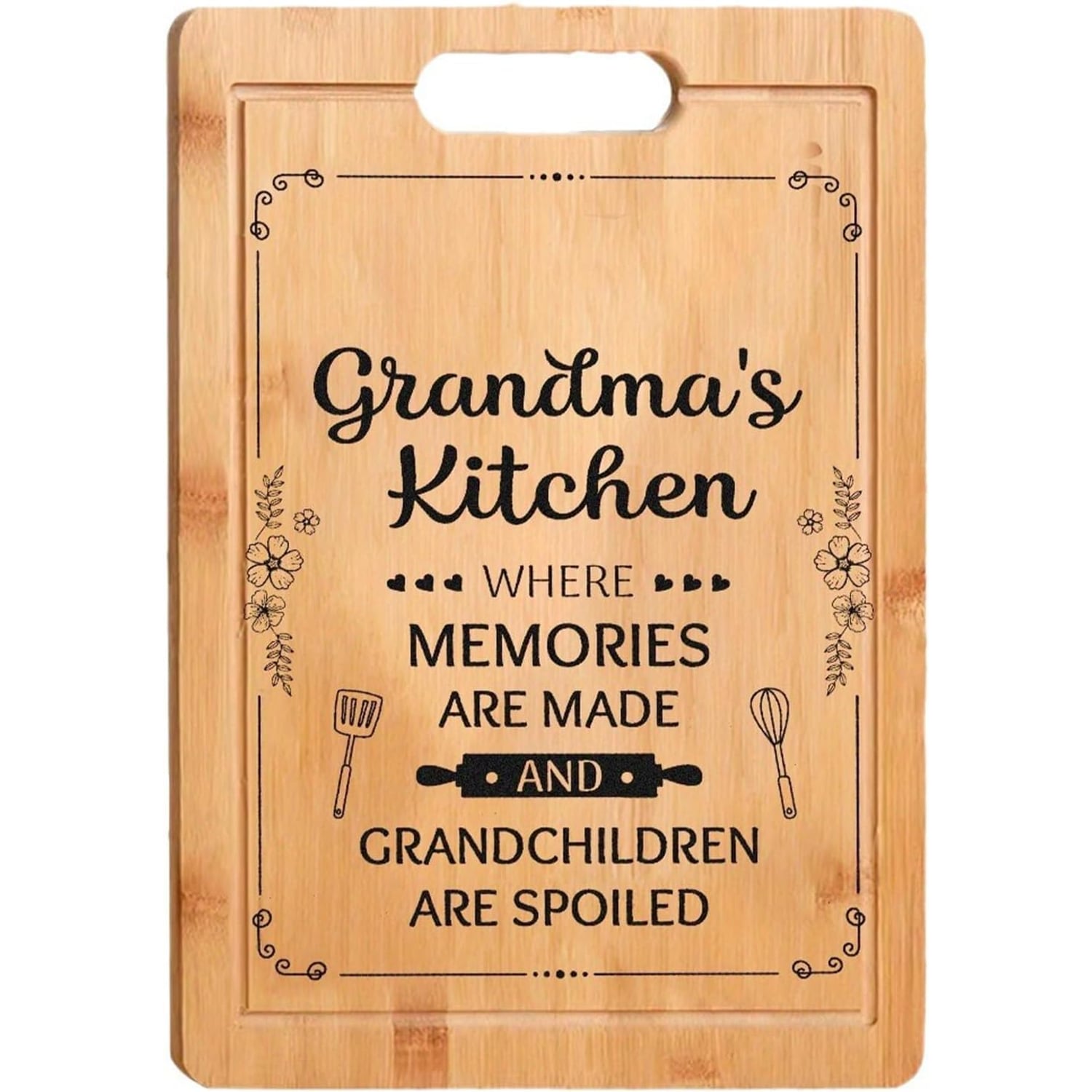
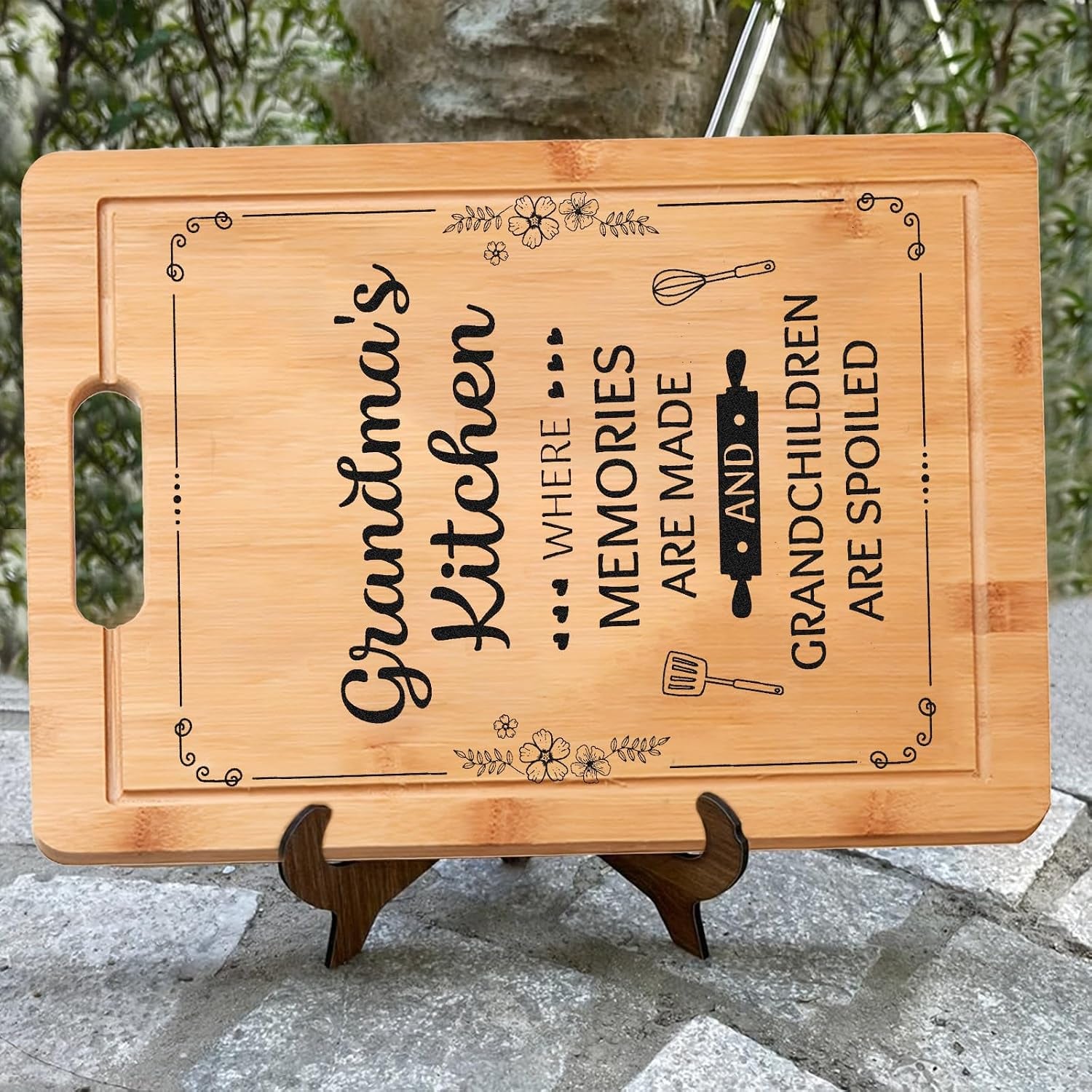
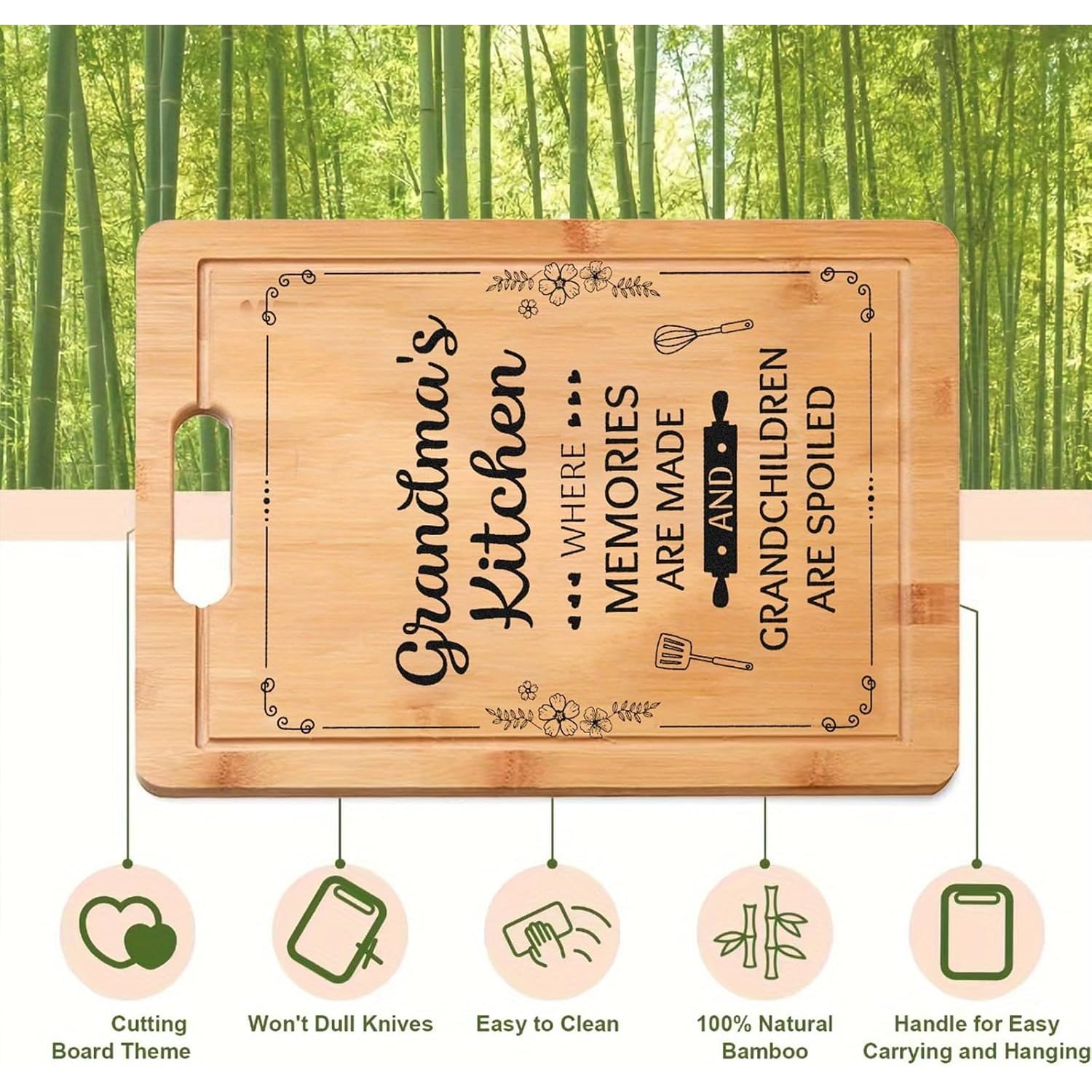
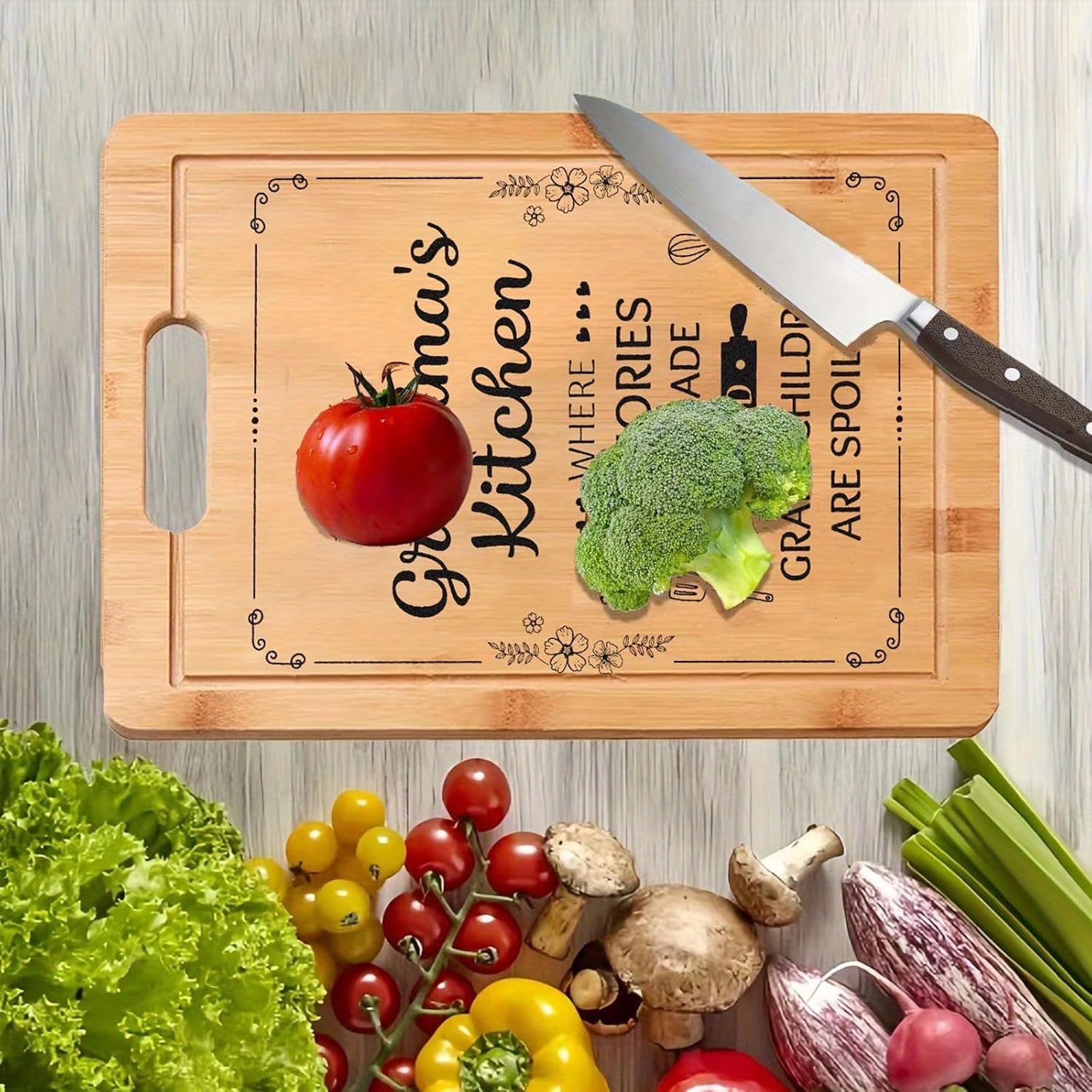
A chopping board sidesteps most of that. It is a thing with a job. It goes on the bench, it gets used, and it quietly carries a message every time she picks it up. The Grandma's Kitchen engraved chopping board is built around that idea. It is a real board at a real working size, 30 cm long by 19 cm wide and 1.5 cm thick, with the design cut into the wood rather than stuck on the surface.
That distinction matters more than it sounds. Printed kitchen items look great in a photograph and tired after a month. Engraving goes into the timber, so the wording holds up as the board darkens and softens with use. Ten years in, a printed board looks worn out. An engraved one just looks older, which is a different thing entirely.
Why wood still wins for everyday boards
There are four common chopping surfaces in home kitchens, and they are not equal.
Glass is easy to clean and terrible for knives. Every cut on glass is the edge of your blade hitting something harder than it is. Ceramic and stone are the same story. Plastic is cheap and fine, but it scores badly over time and those grooves hold onto things. Wood gives slightly under the blade, closes up again, and does not blunt a knife on contact.
If the person you are buying for has one good knife she has used for years, a wooden board is the respectful choice. There is also the sound. Chopping on glass is a sharp clack. Chopping on wood is a dull knock. Anyone who cooks a lot will notice the difference within one onion.
Wood does ask for a bit of care in return, and we will come to that.
Getting the size right
Chopping board sizes split into three rough groups.
Small paddles under about 25 cm are for cheese, limes and garnish. They look lovely and they are useless for a real dinner. Large butcher blocks over 45 cm are brilliant if you have the bench space and the arm strength, and a nuisance if you do not. The middle ground, roughly 28 to 35 cm long, is where most home cooking actually happens.
This board sits in that middle ground at 30 cm by 19 cm. You can dice a couple of onions, slice a cucumber or portion a chicken breast without food falling off the edges. You can also wash it in a standard sink and stand it in a standard dish rack, which sounds trivial until you own a board that does not fit either.
The 1.5 cm thickness is worth noting too. Thin boards flex and skate. Thick boards are heavy to lift. At 1.5 cm and 0.6 kg, this one is substantial enough to stay flat on the bench but light enough to carry to the table with one hand while the other hand holds a bowl.
That weight is a bigger deal for an older cook than people realise. Heavy boards get avoided. A board that lives at the back of the cupboard because it is awkward to lift is not a gift, it is a storage problem.
Who this suits
This is a good match for a grandmother who still cooks regularly and would rather have something she uses than something she dusts. It also works for the grandmother who has downsized into a smaller place, because the board tucks into narrow gaps that a full butcher block will not.
It suits anyone buying for a birthday, Christmas or Mother's Day who wants to spend a sensible amount and give something with a bit of feeling behind it. If you have been hunting for the best sentimental kitchen gift that does not slide into kitsch, an engraved board is usually the sweet spot. The message is there, but it is on a tool, not a plaque.
It is less suited to a few situations. If she never cooks, a board will not change that. If she already has six boards, add this one only if you genuinely think she will like the engraving. And if you need her name or a specific date engraved, this is a fixed design, so a made-to-order board is the better route.
Using it well
Treat it as a produce and serving board. The manufacturer lists vegetables as the recommended use, and plenty of households keep wooden boards for vegetables, bread, fruit and cheese while using a separate plastic board for raw meat. That is a sensible habit regardless of the board.
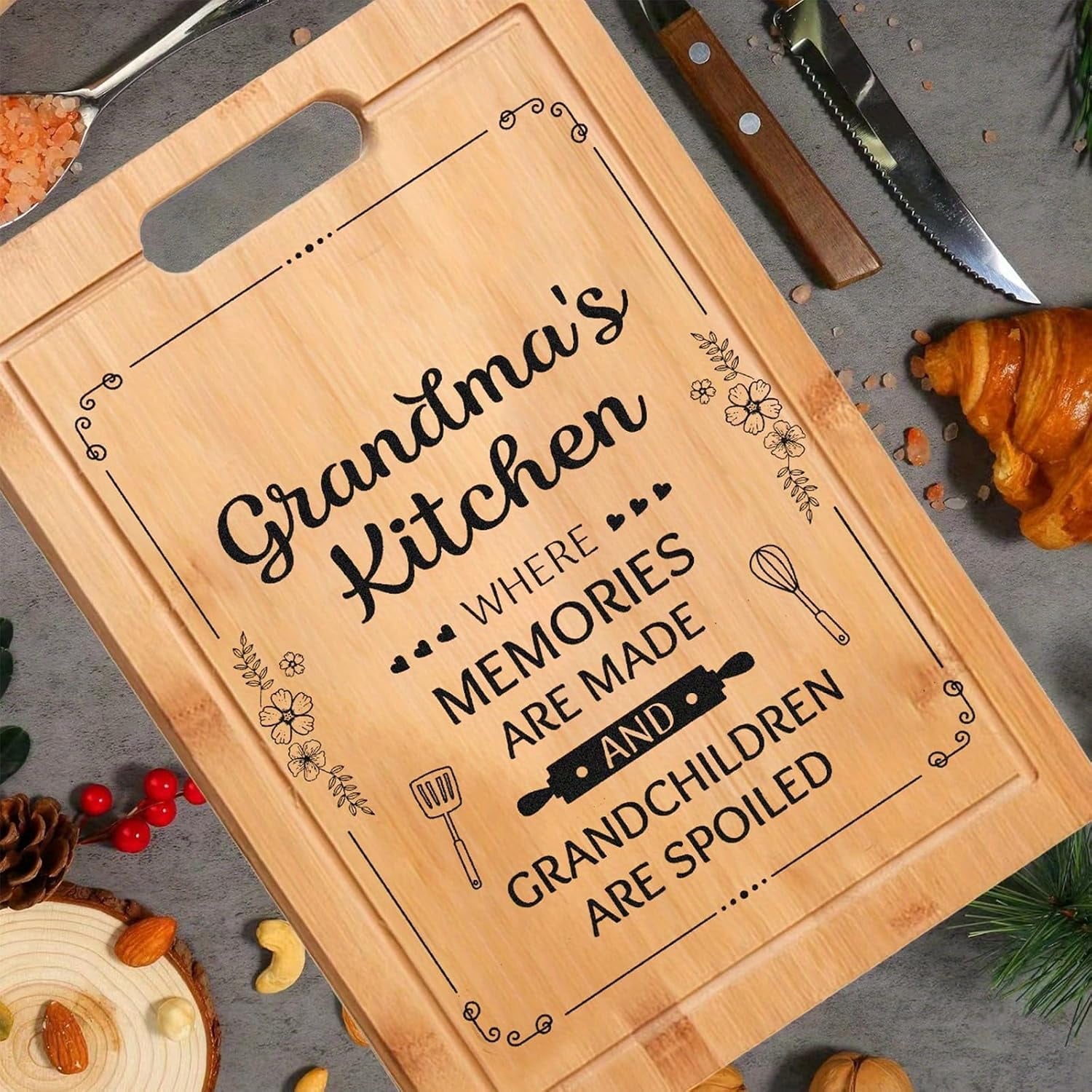
Most people chop on the plain reverse face and keep the engraved side presentable for serving. That way the design stays crisp and the board still does the hard work. When guests arrive, flip it over, load it with sliced bread and a wedge of cheddar, and it becomes a serving piece without any extra effort.
Because it is 30 cm long, it holds a baguette cut into rounds or a decent spread of crackers and fruit. It is one of the more useful dual-purpose boards at this price, and a lot of people end up reaching for it more than their bigger one.
Care, honestly
Wooden boards are easy to look after and easy to ruin, and the difference is about five minutes a month.
Wash it by hand with warm water and a small amount of mild dishwashing liquid. Use a cloth or a soft brush, rinse it, then dry both faces with a tea towel immediately. The single most damaging thing you can do to a wooden board is leave it sitting in water or drying on one side only, because one face swells while the other stays dry and the board cups.
Never put it in the dishwasher. The combination of heat, detergent and a long wet cycle will crack and warp it. There is no version of this where it survives a few dishwasher runs.
Every few weeks, rub in a food-safe mineral oil or a dedicated board conditioner. Apply it with a cloth, let it sit for an hour or so, then wipe off the excess. This stops the timber drying out, reduces staining and makes the engraving stand out. Avoid olive oil and other cooking oils, which can go rancid inside the wood.
If the surface feels rough after a wash, that is just the grain lifting. A quick pass with fine sandpaper along the grain and a fresh oiling sorts it. If it picks up a strong smell from garlic or onion, rub it with half a lemon and some coarse salt, rinse and dry.
Store it flat or standing on its edge with air around it. Do not trap it flat against a wall or stack it under something wet.
Packing and presenting it
It is a flat rectangle, which makes it one of the simpler things to wrap. Brown paper and string suits the look of it. A ribbon tied around the middle with a small sprig of rosemary tucked under takes about a minute and lifts it considerably.
If you want to build it into a bigger present, pair it with a block of good cheese, a jar of chutney, a decent vegetable peeler or a small bottle of board oil so she can keep it in good condition from day one. That last one is a quietly thoughtful addition that most people do not think of.
The short version
This is a real wooden chopping board at a useful everyday size, 30 cm by 19 cm by 1.5 cm, weighing 0.6 kg, with a Grandma's Kitchen design engraved into the timber rather than printed on it. Wood looks after knife edges better than glass or stone. The size fits ordinary benches, sinks and dish racks. The weight makes it easy to lift and carry.
Keep it out of the dishwasher, dry it after every wash, and oil it occasionally, and it will still be in the kitchen long after most gifts have been quietly recycled. That is the whole appeal. It is useful first and sentimental second, which is usually the right order.